Oaxaca 2021-2026
I have always worked from observation and direct experience, so the form my work takes shifts with each context—from artist books to fabric pieces made in the manner of tapestries, to ceramics in its current iteration. I’m interested in speaking to experiences of migration, the materials chosen reference place, while the processes the materials undergo allude to experiences that individuals, social groups and the territory/physical land go through.
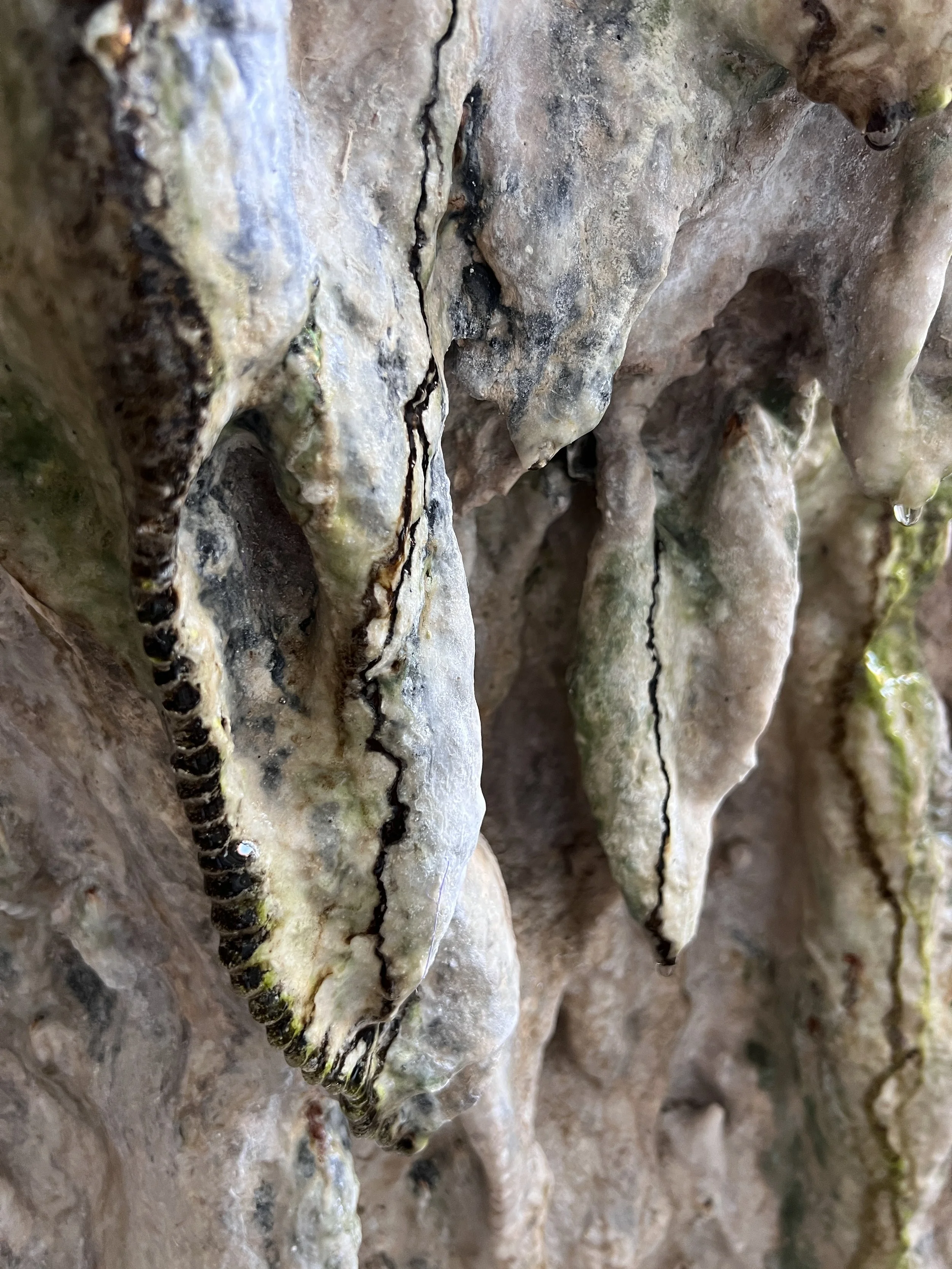
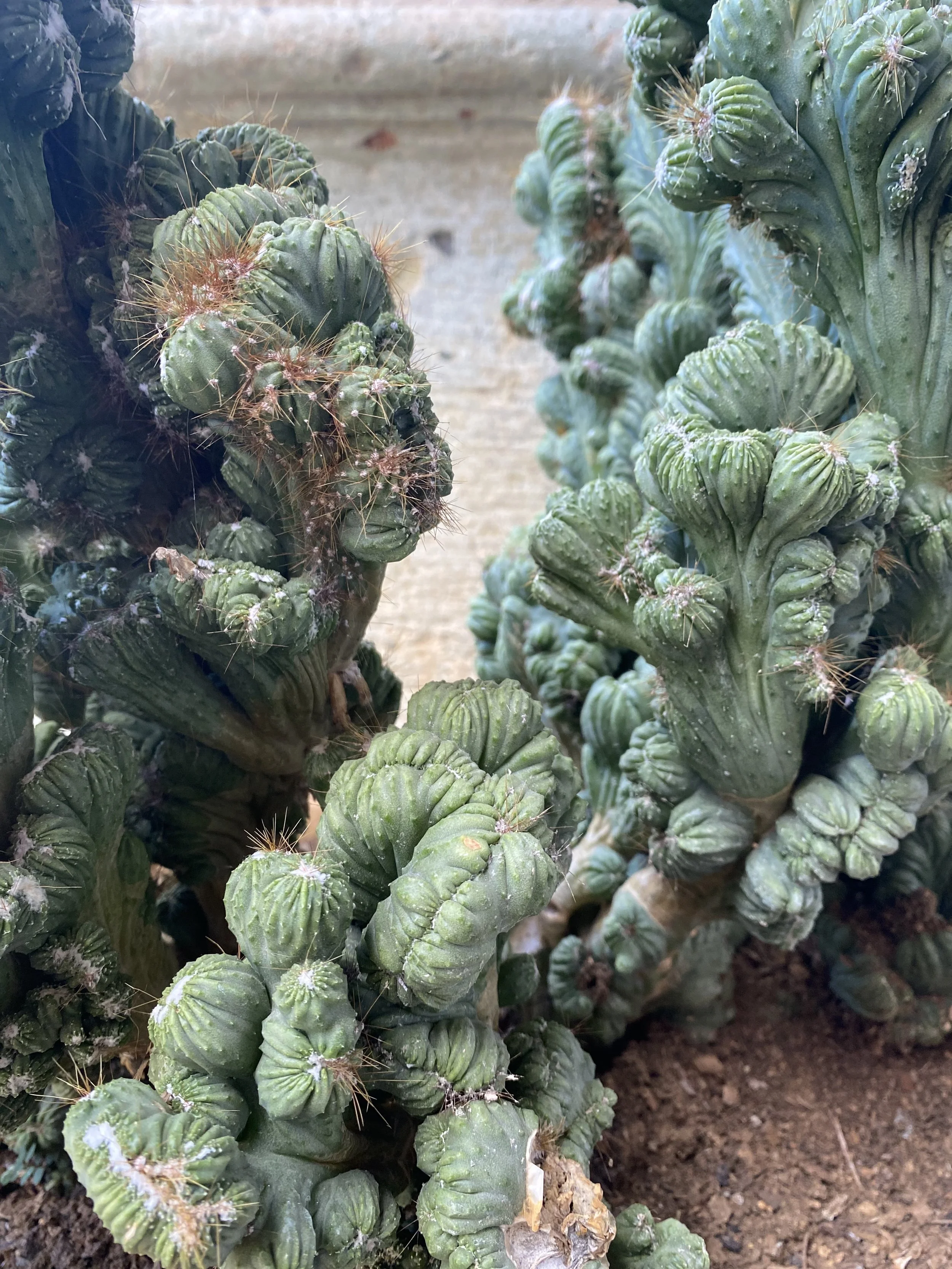
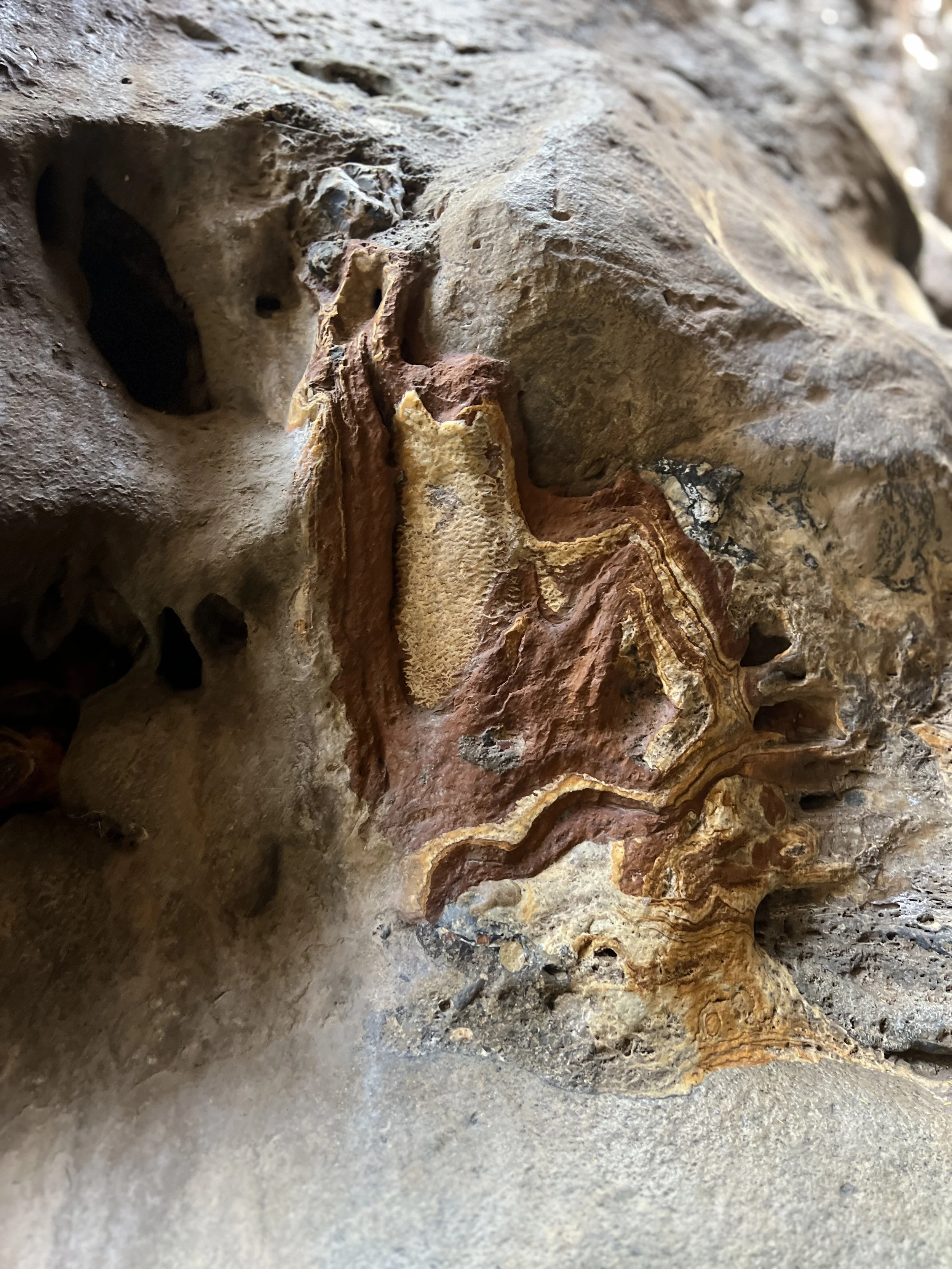
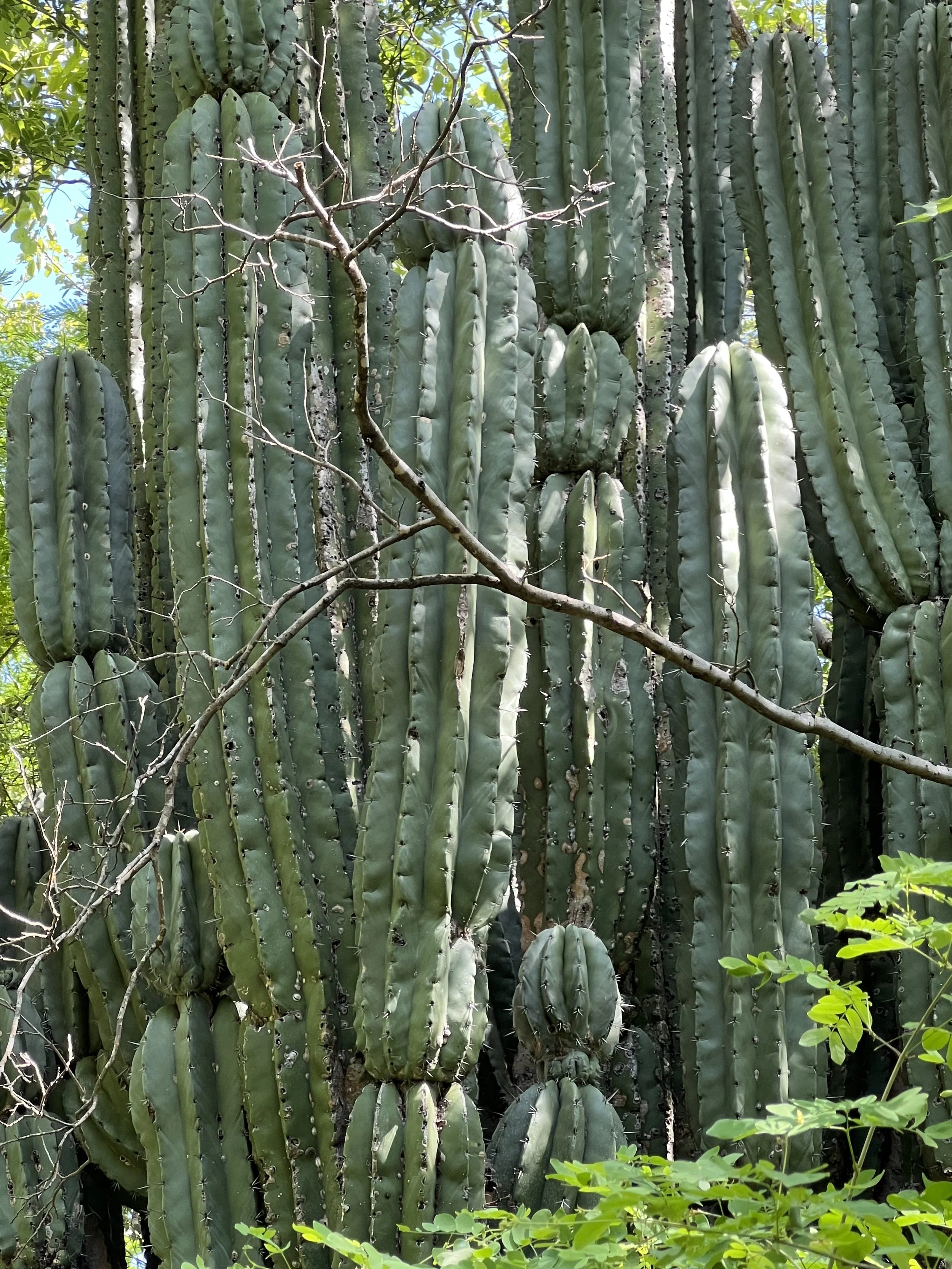
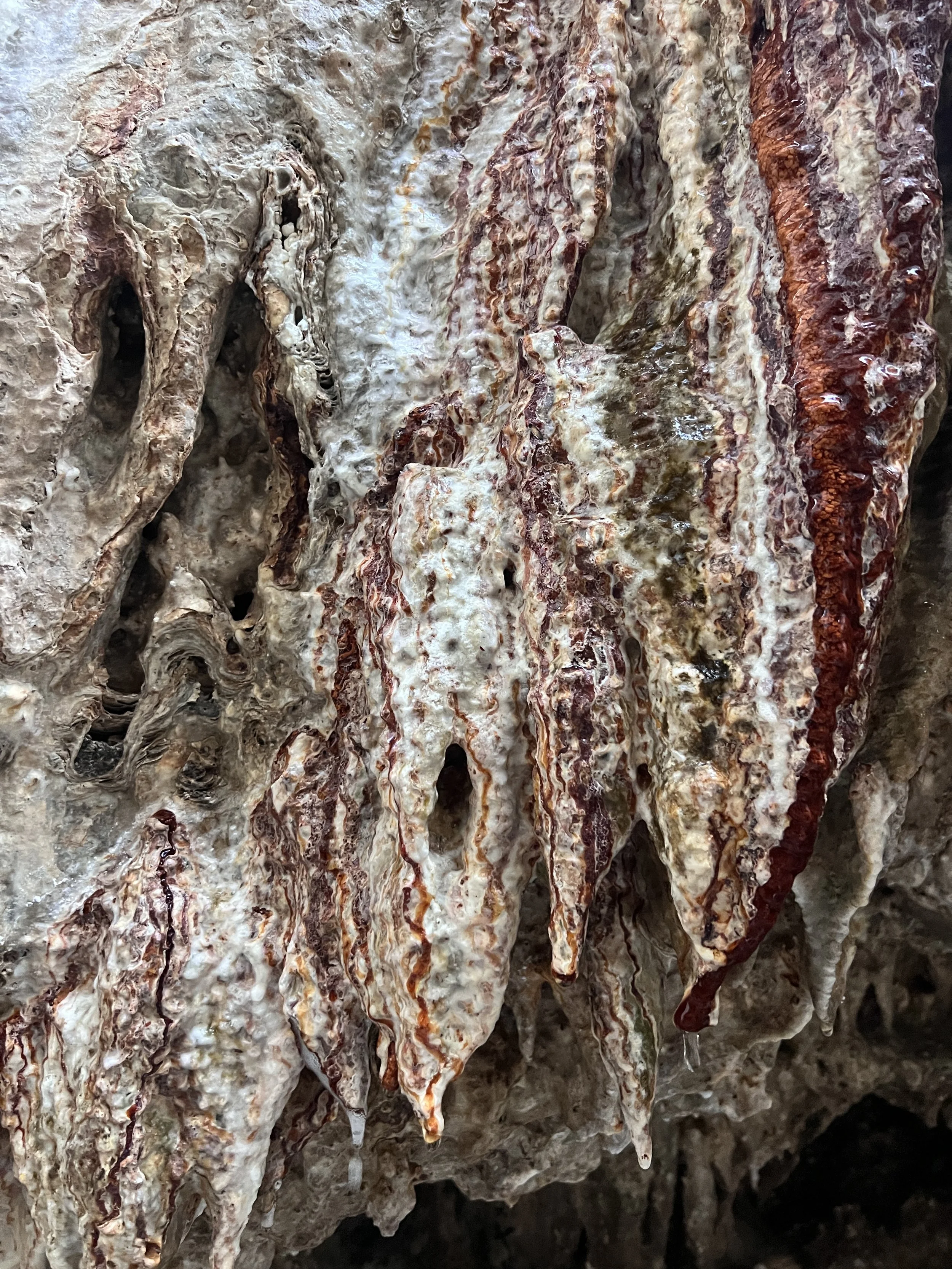
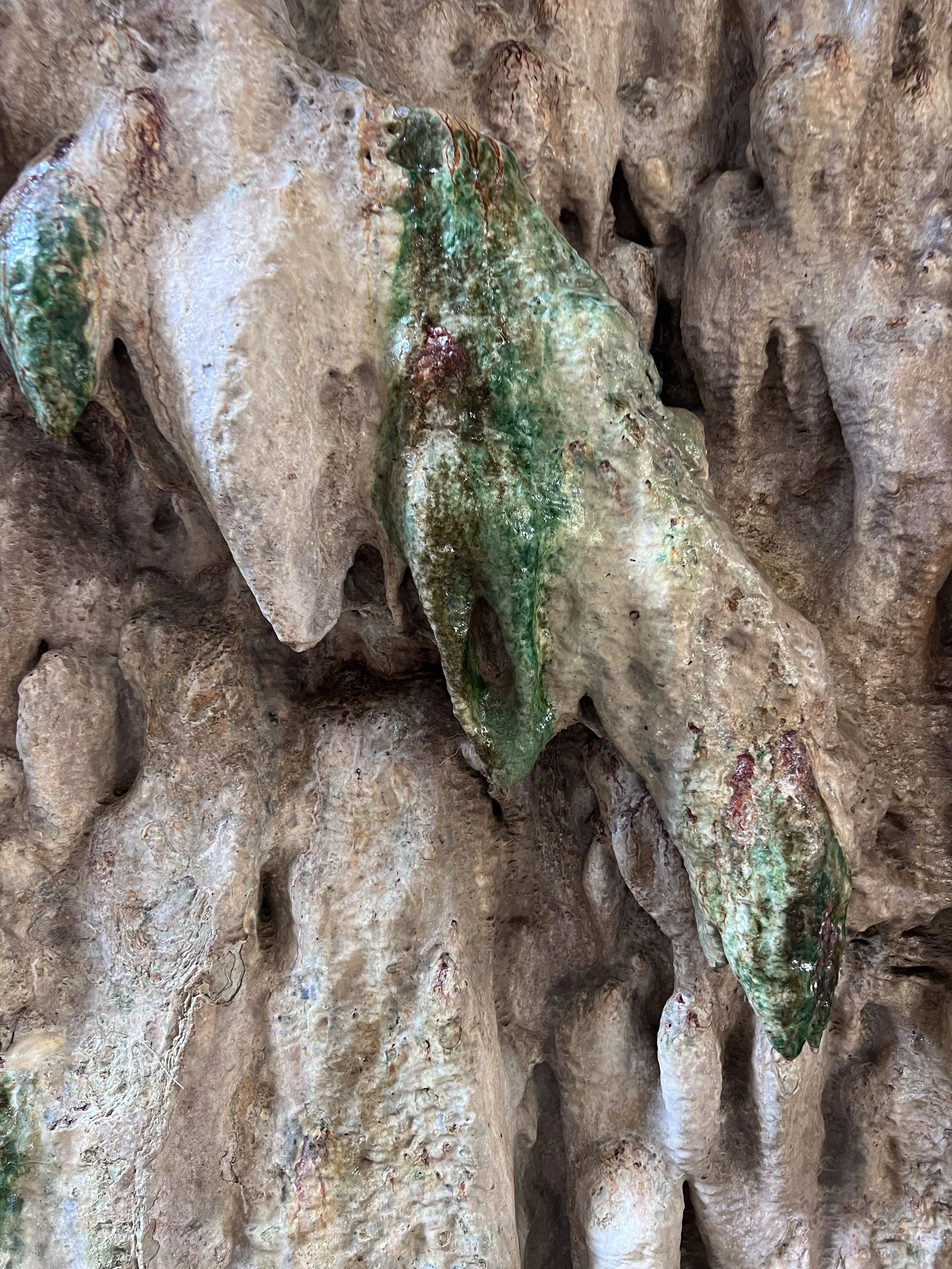
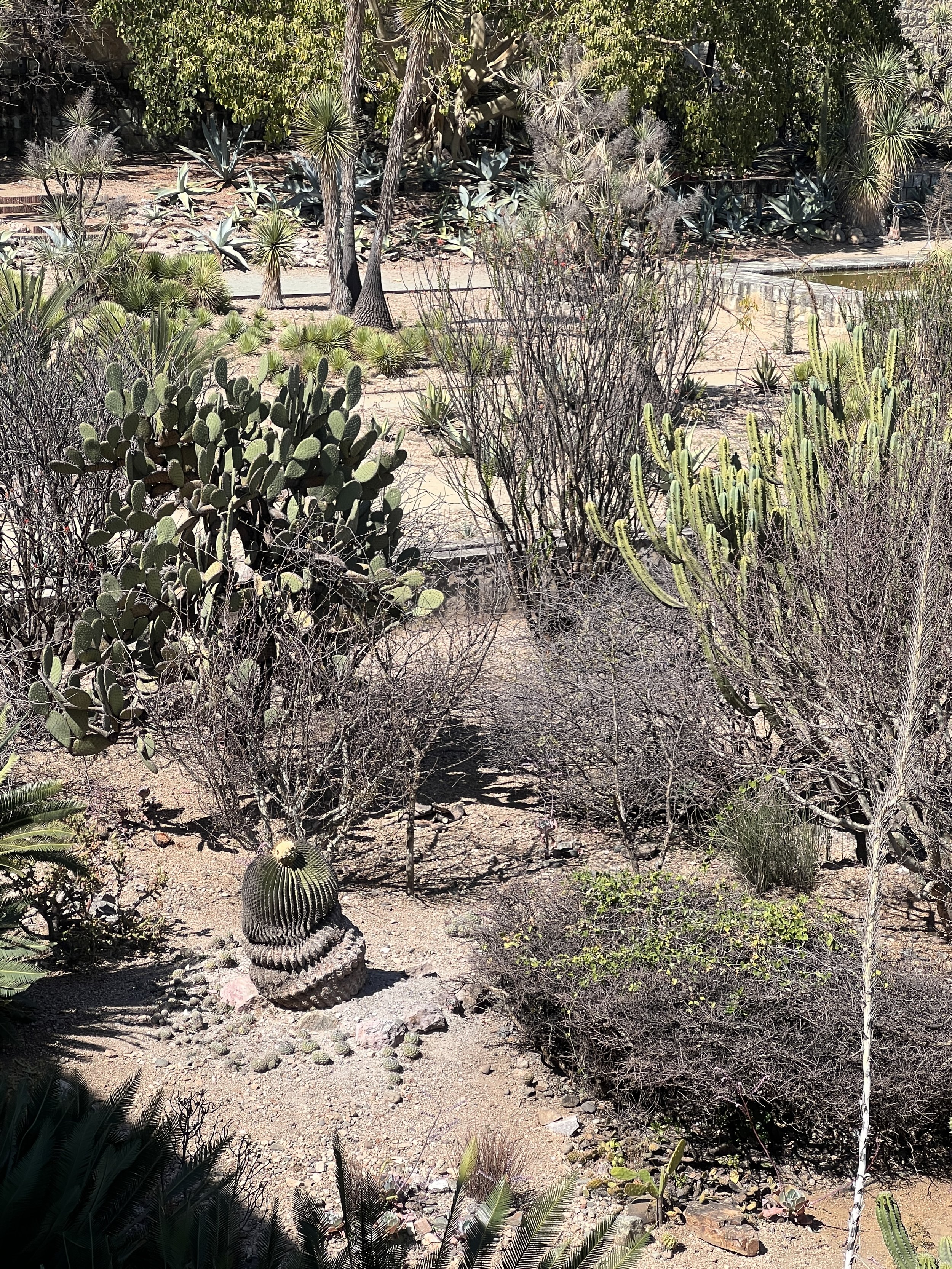
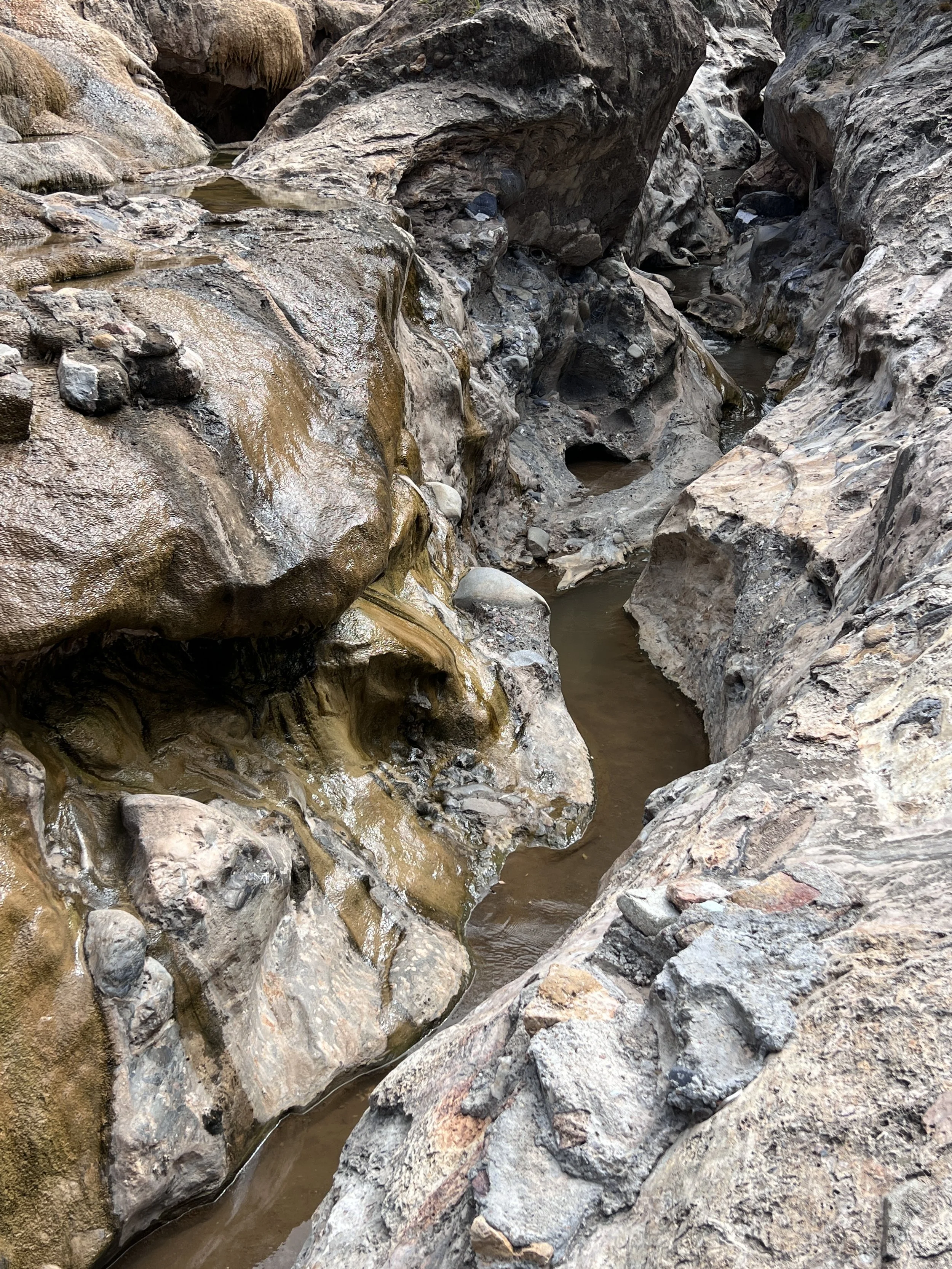
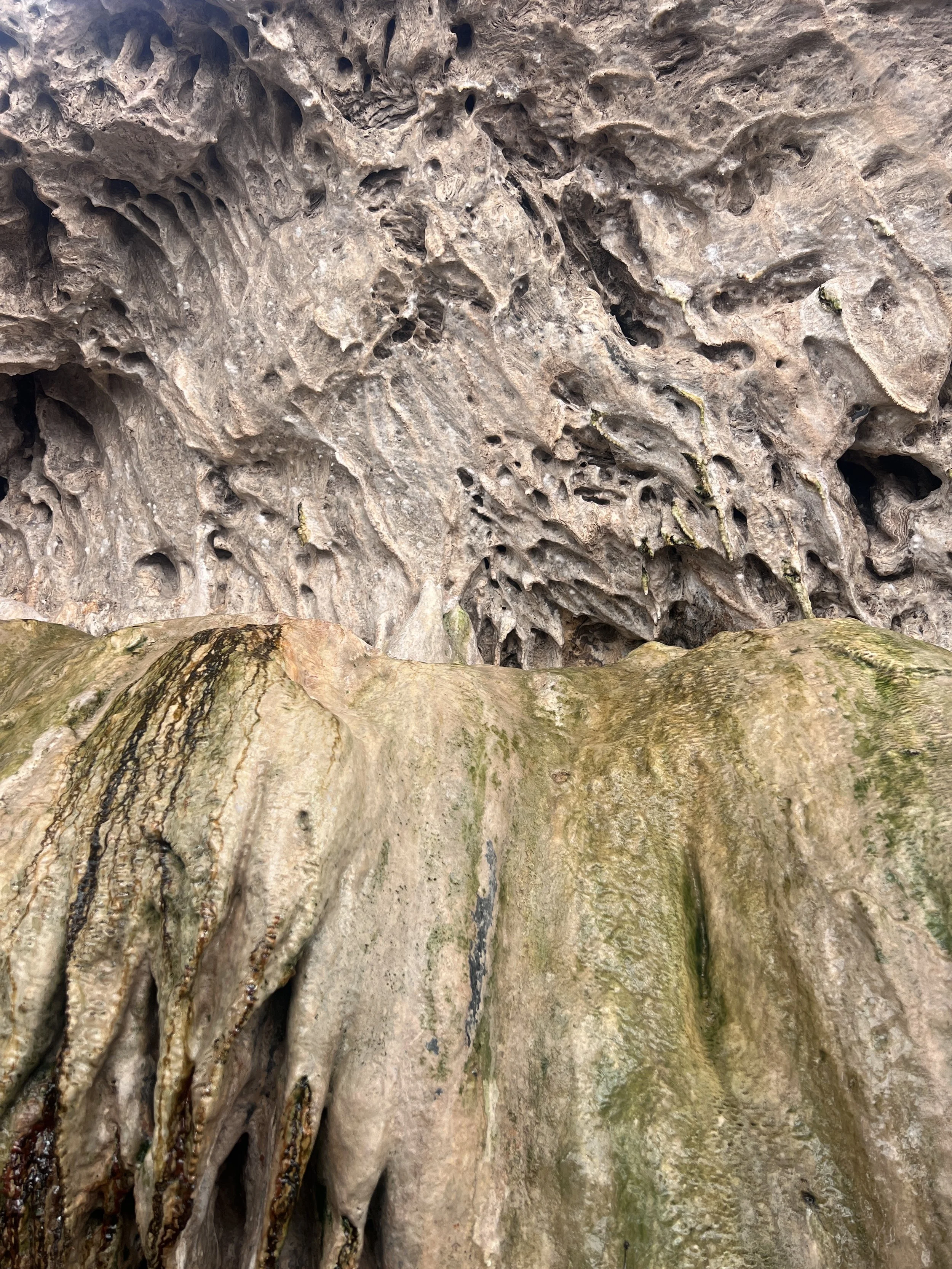
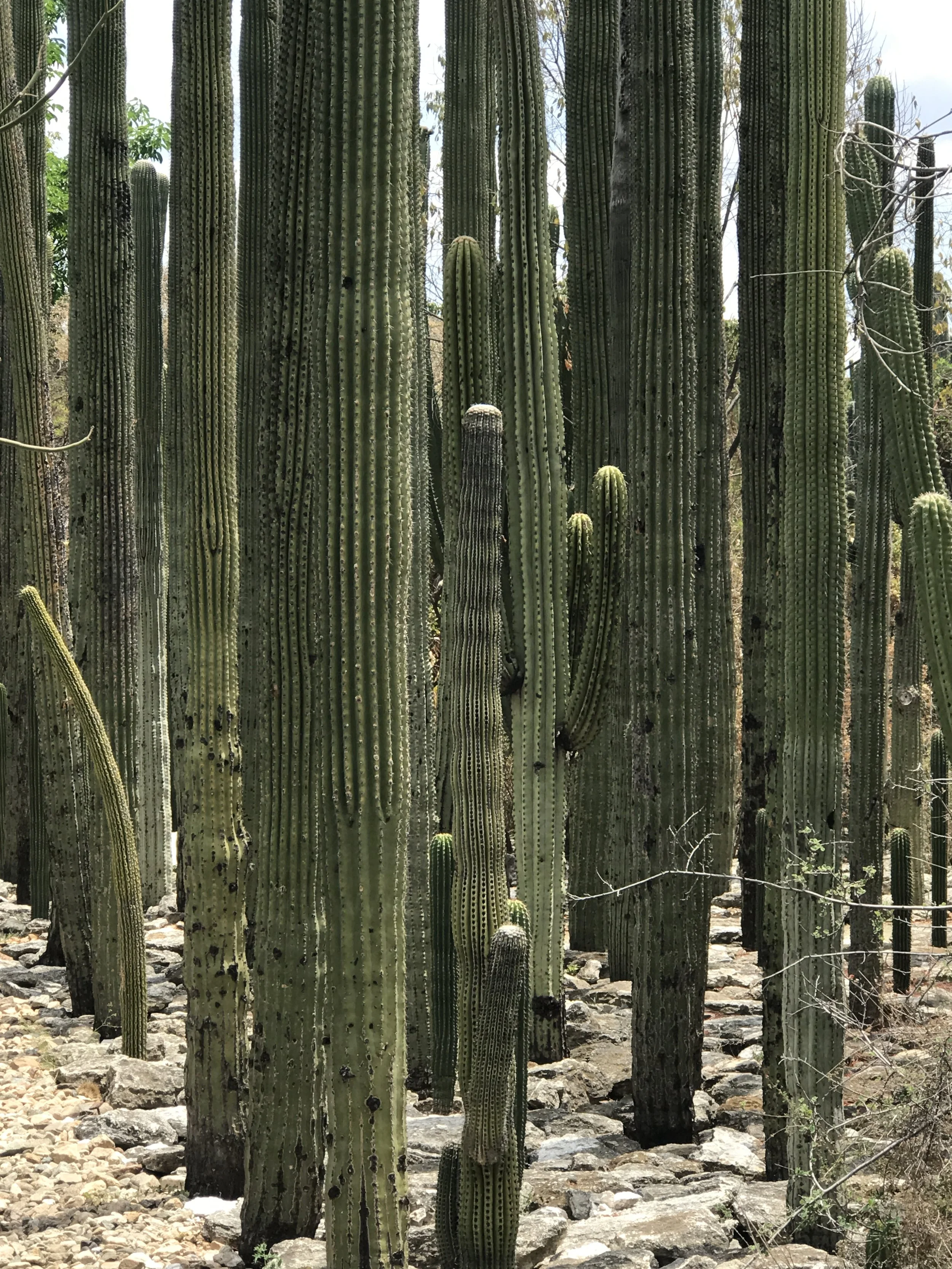
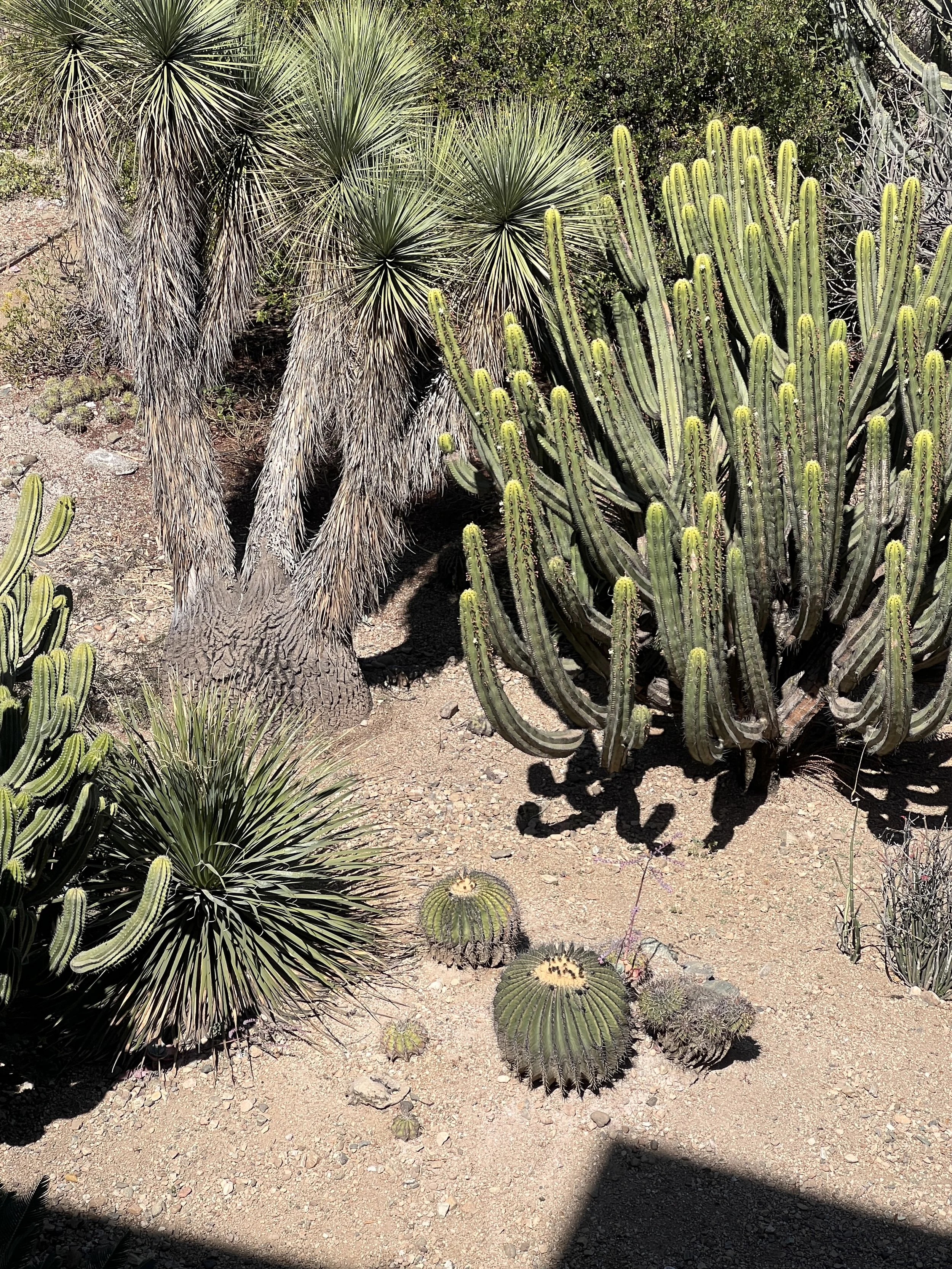
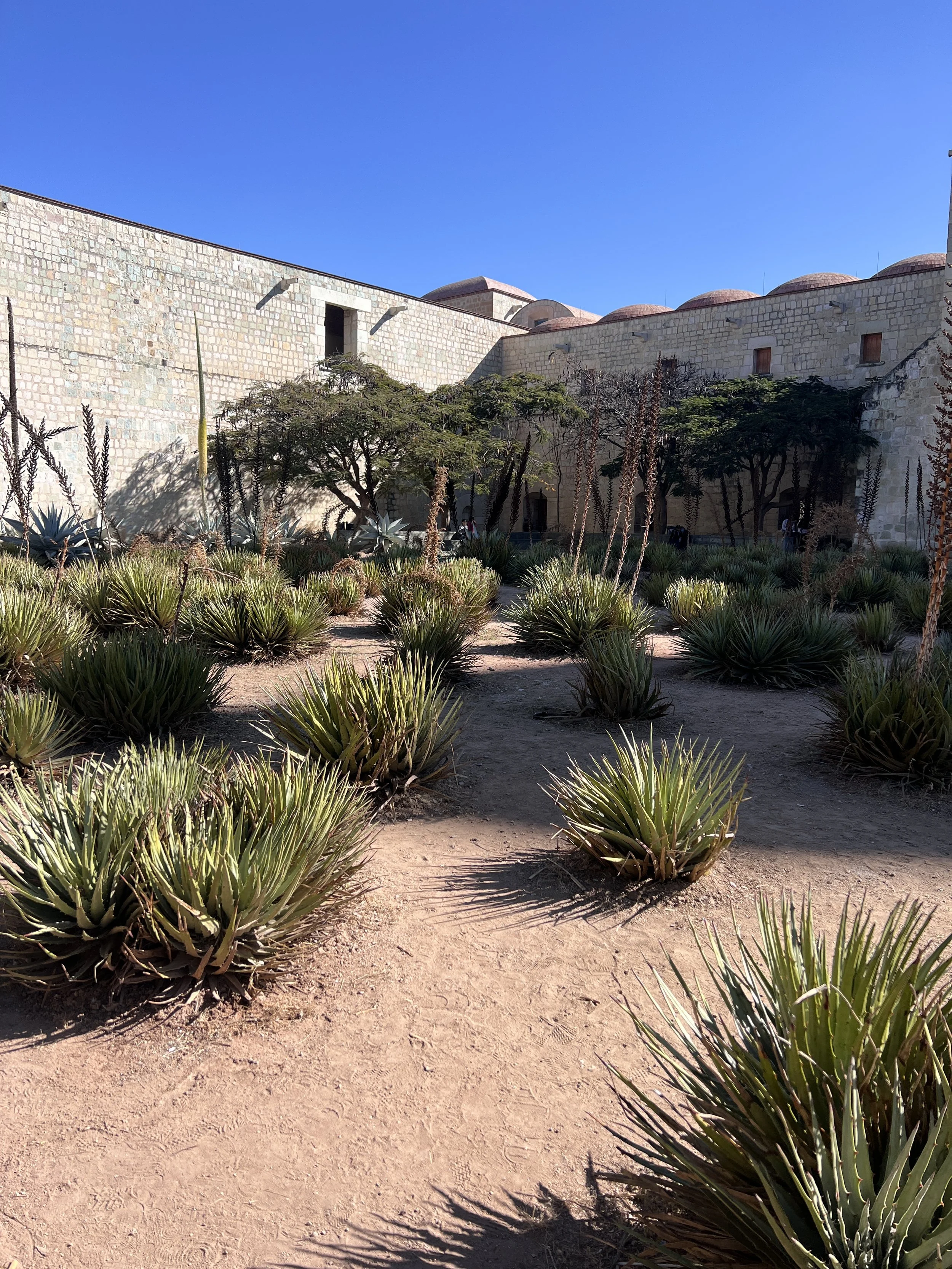
The arid landscape of Oaxaca reshaped the way I perceive time. Time is inscribed in the forms shaped by erosion on the mountain rock faces, or in the formation of stalagmites and stalactites through the slow buildup of mineral deposits carried in single drops of water over time. Time as manifested in growth patterns on the surfaces of cactus and agave plants, and the accumulated, precise actions of insect colonies working together to build a structure.
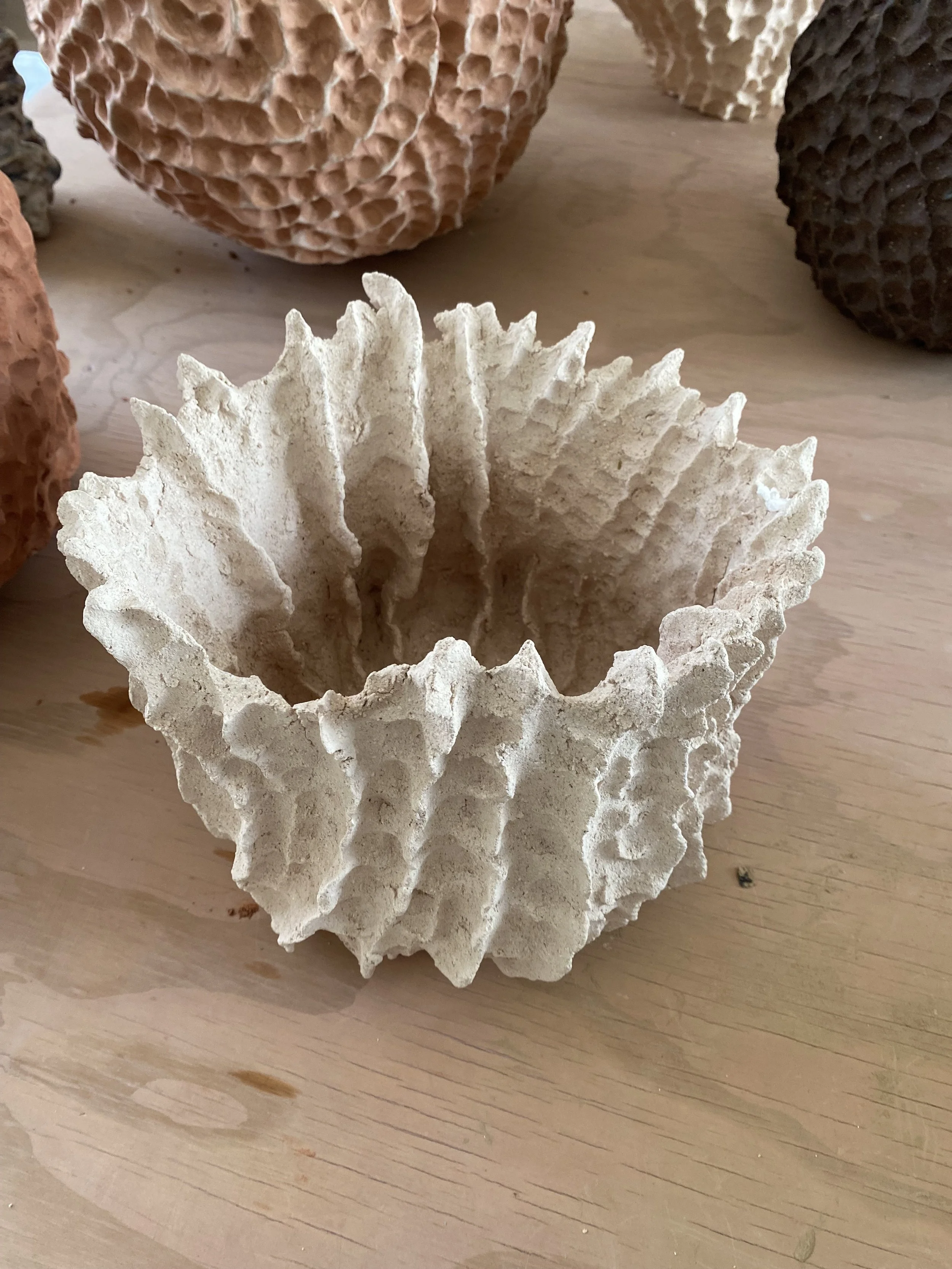
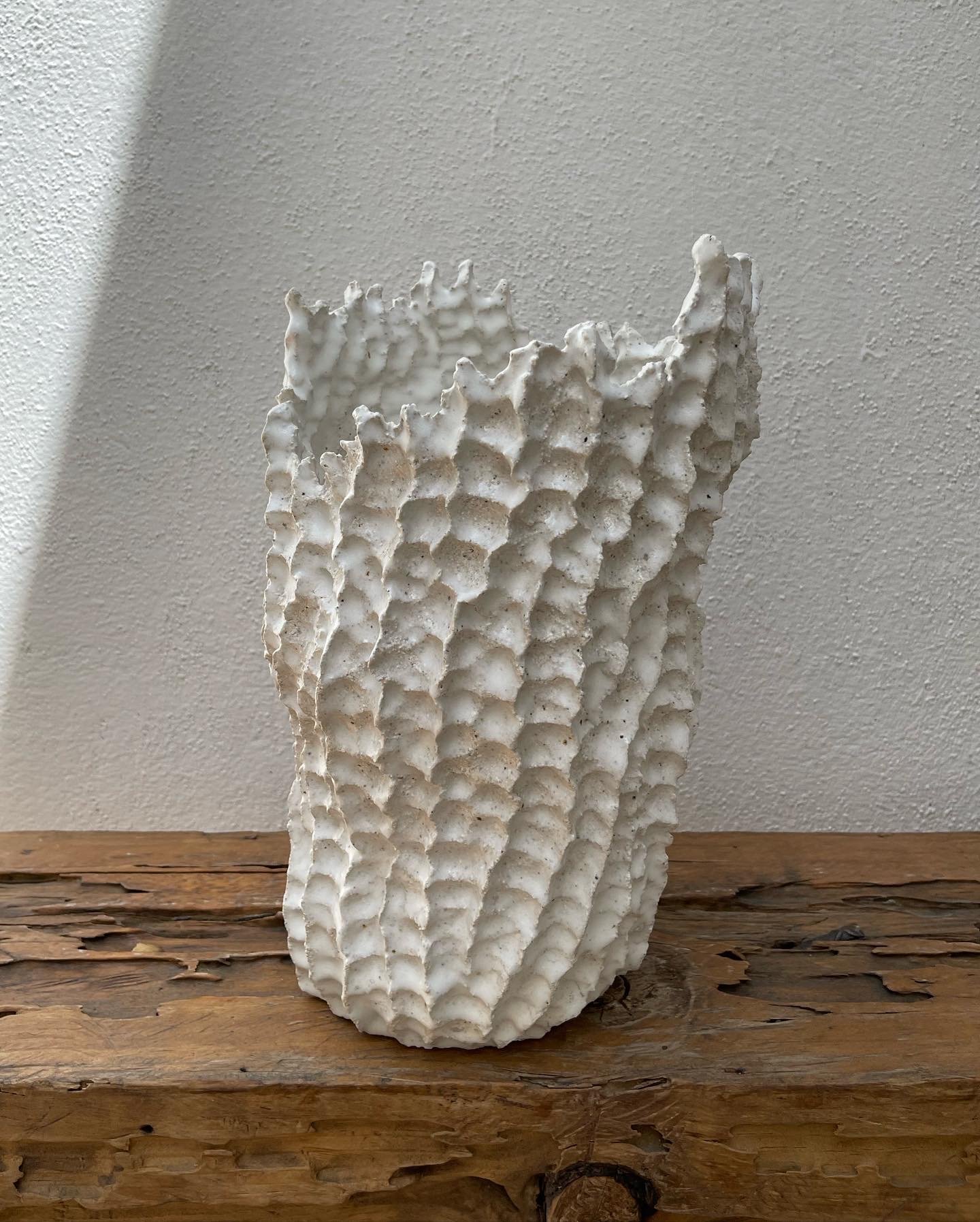
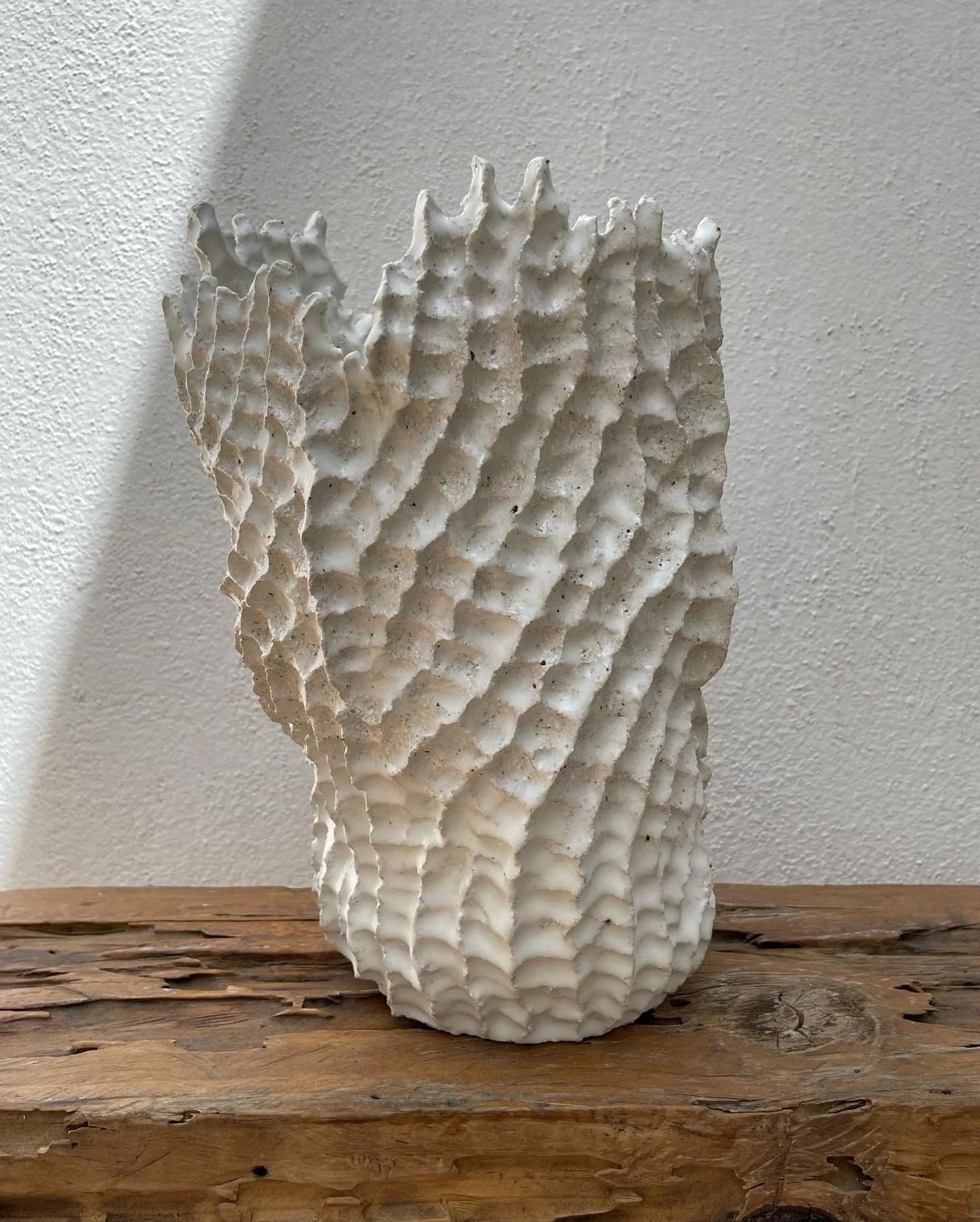
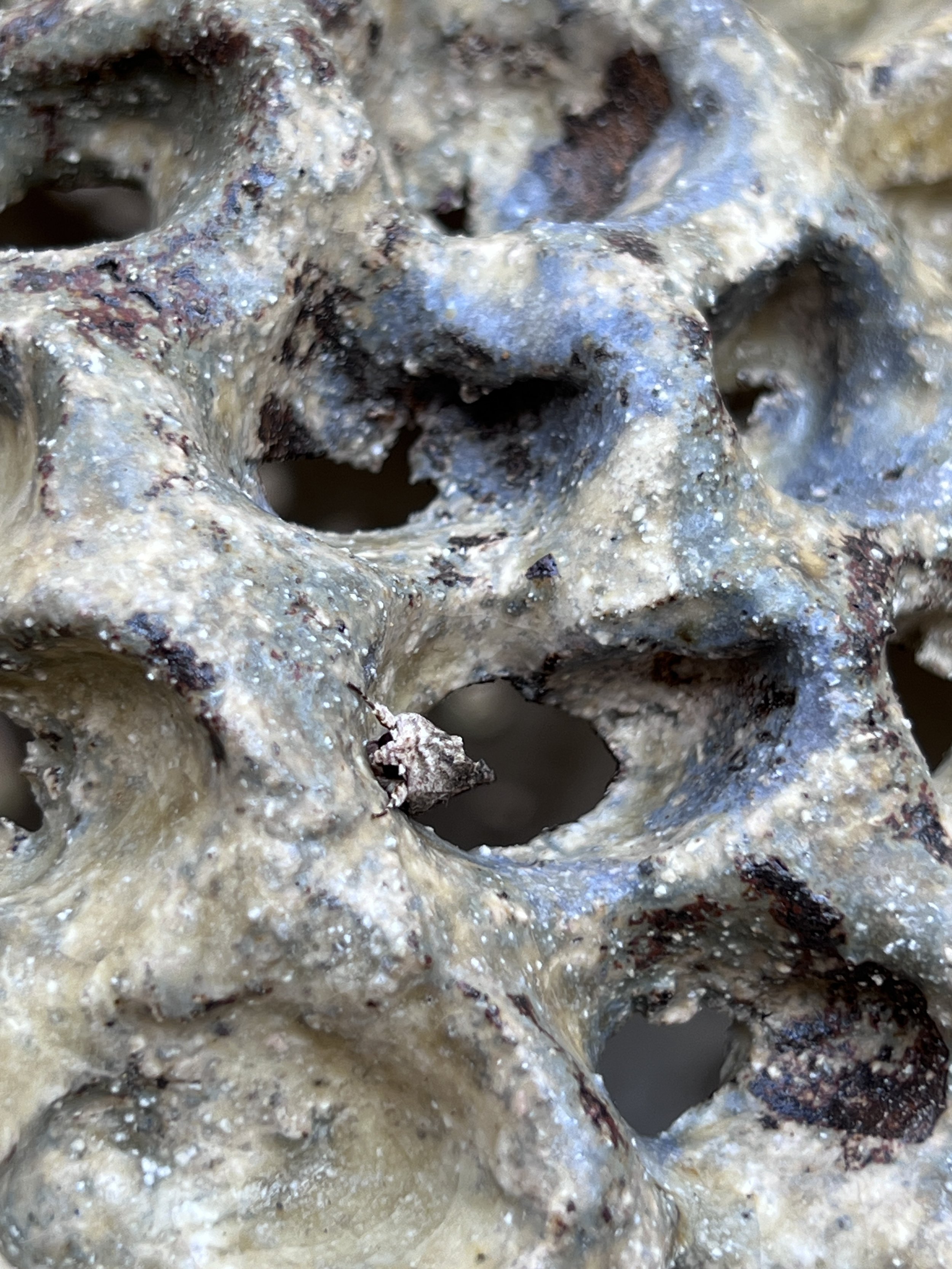
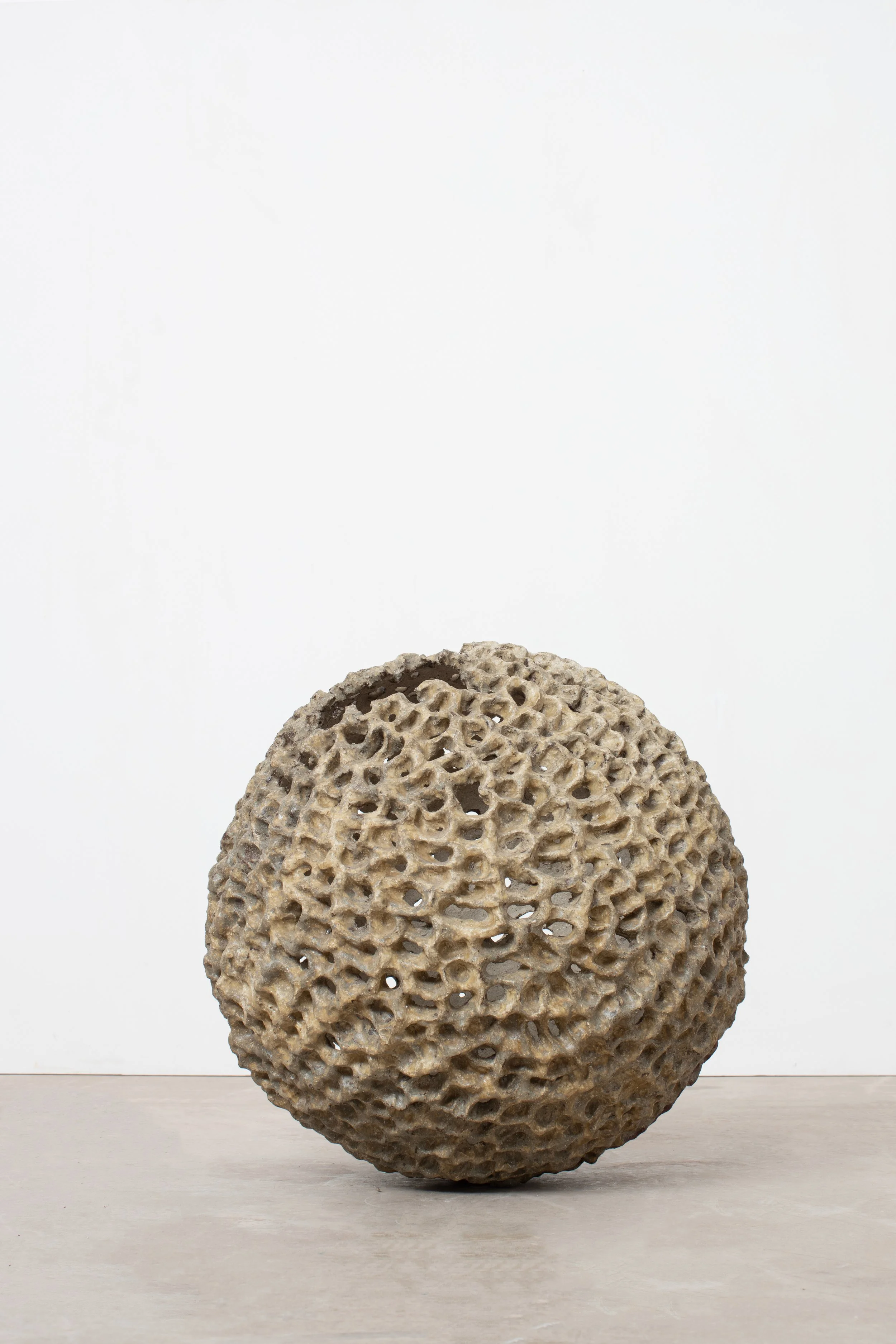
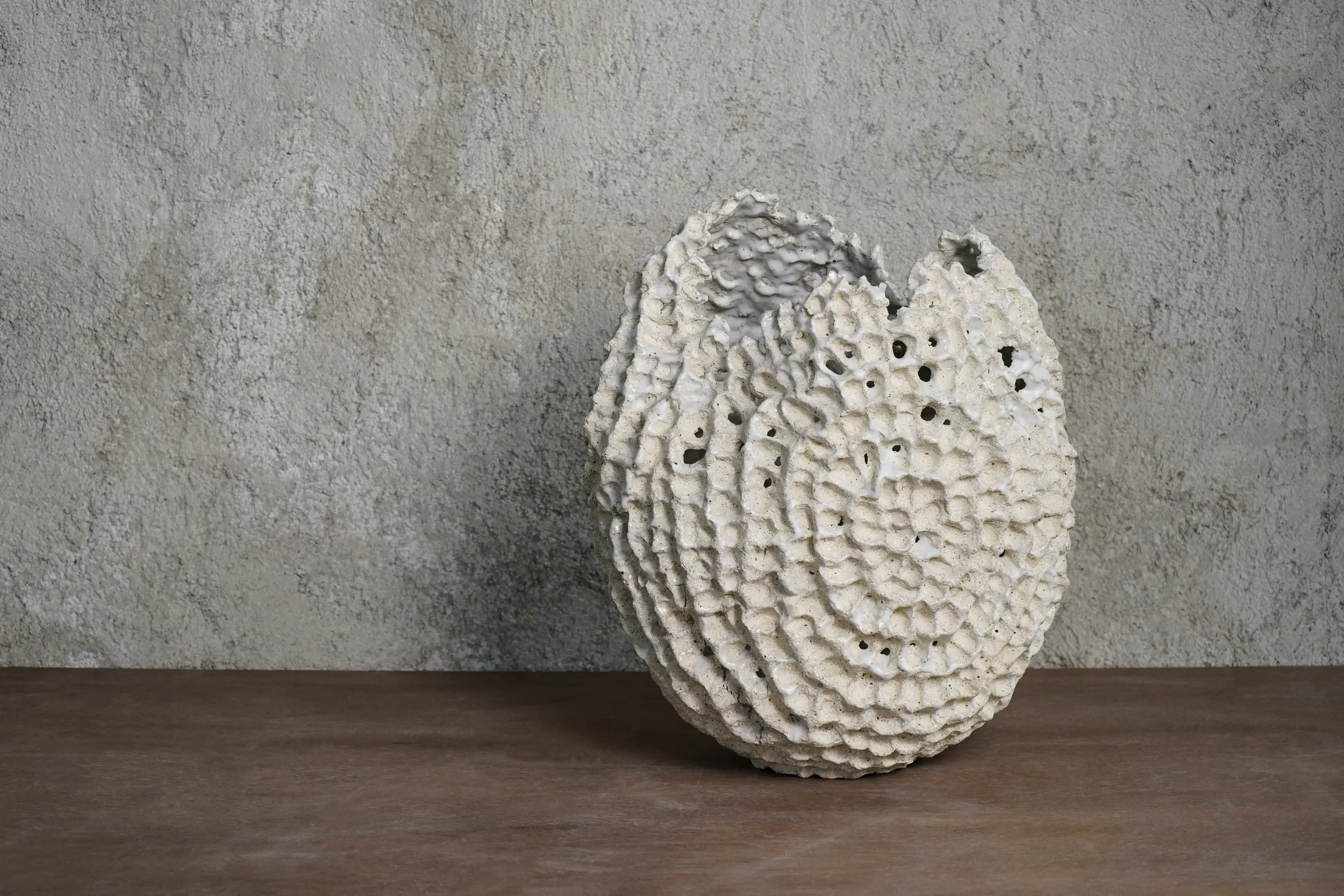
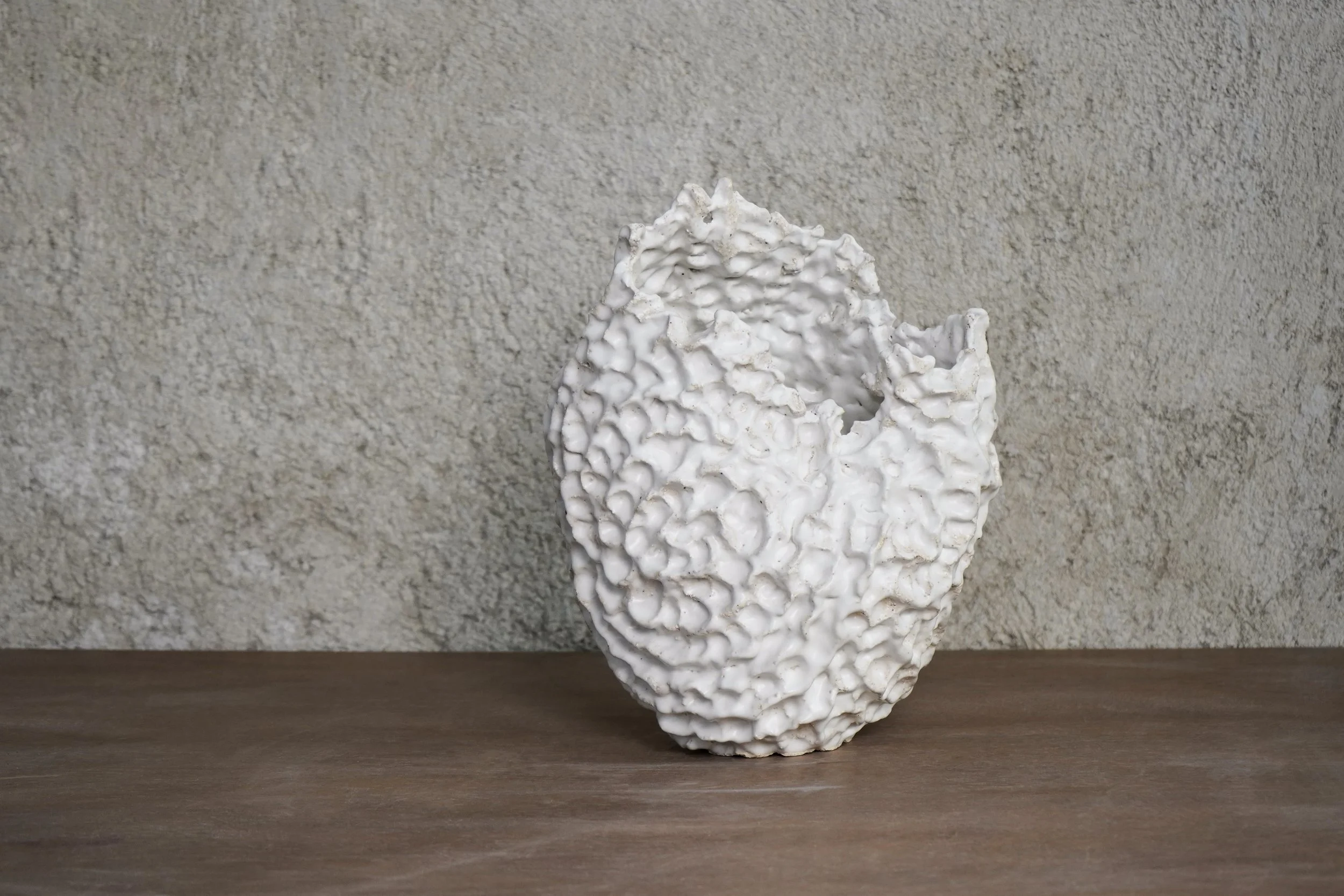
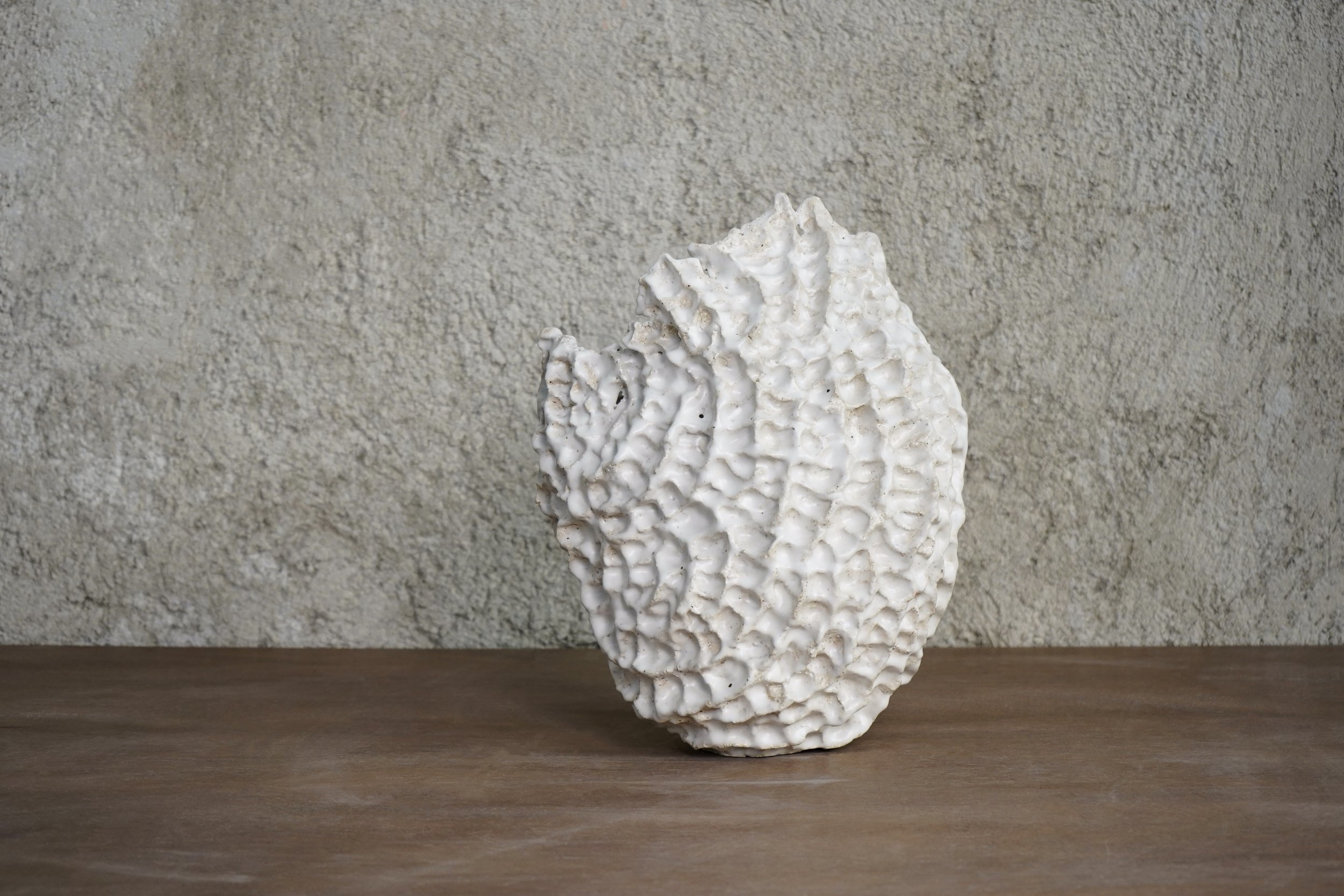
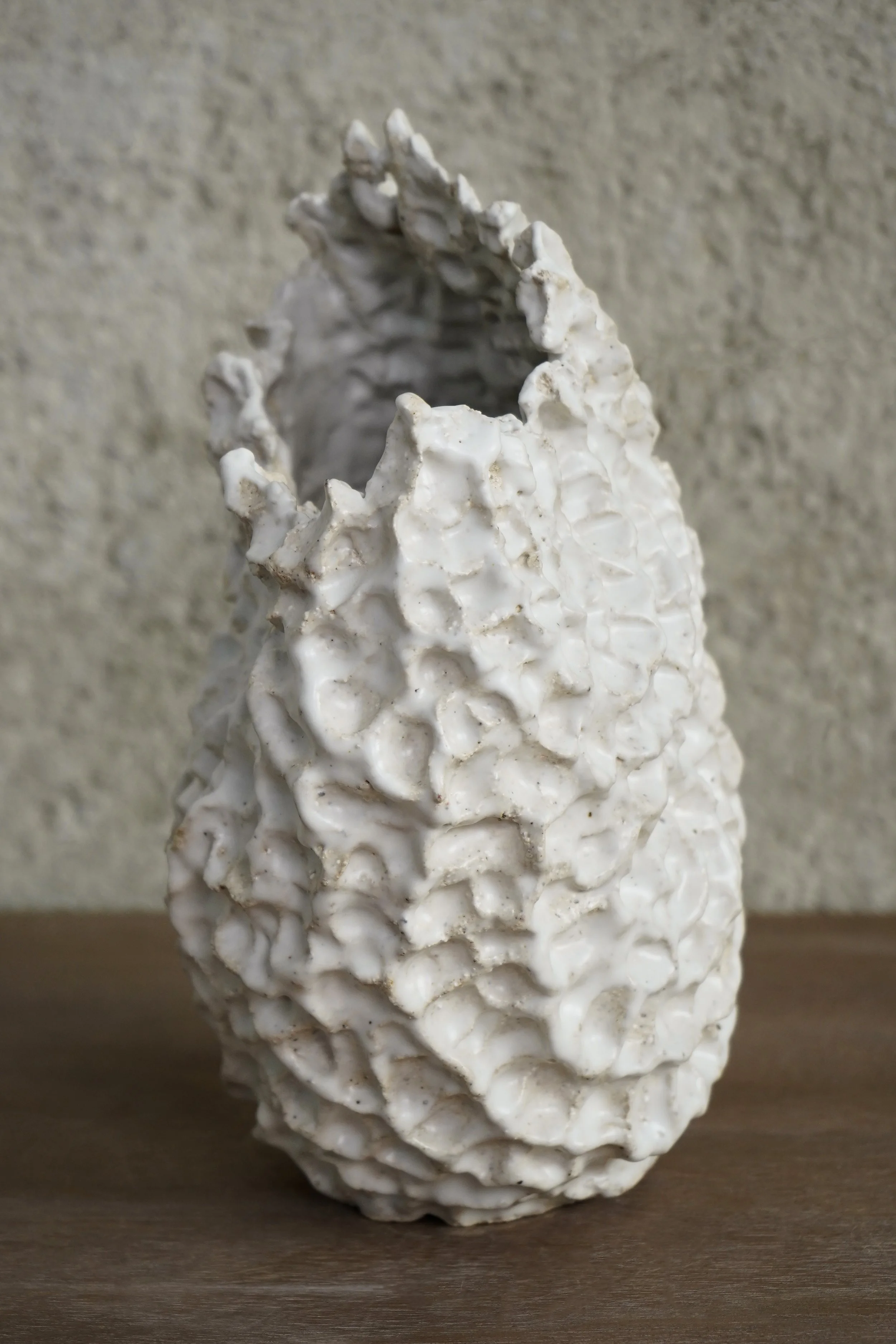
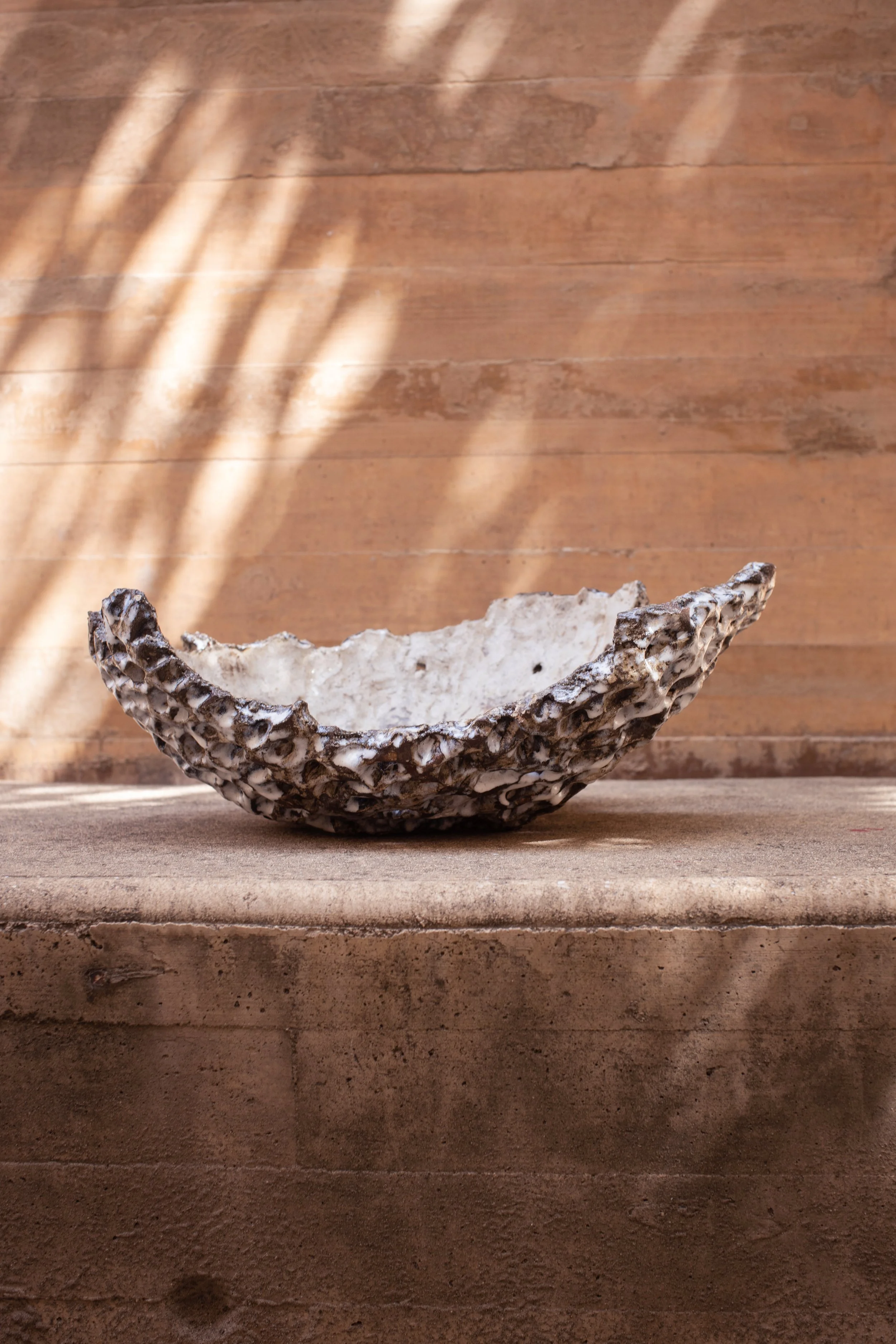
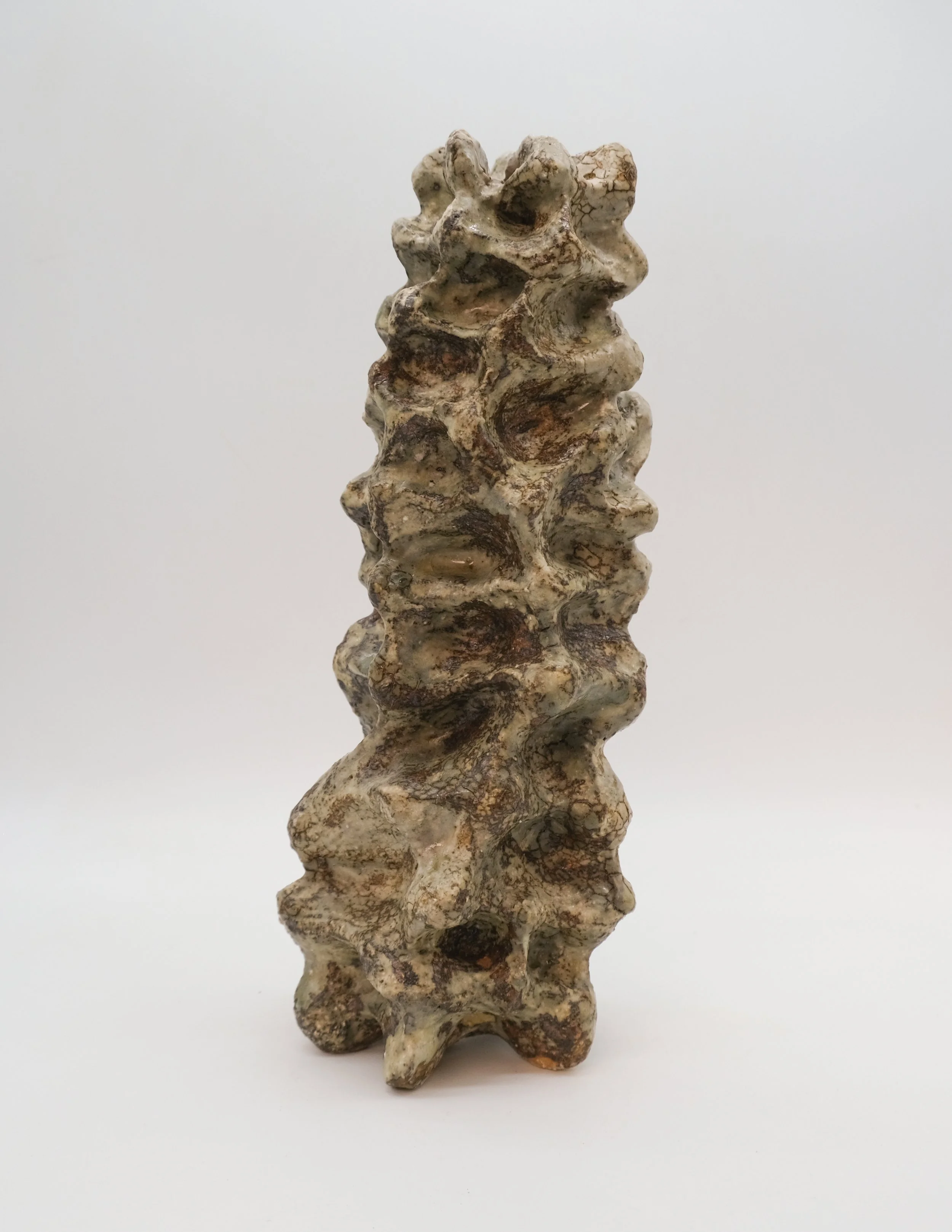
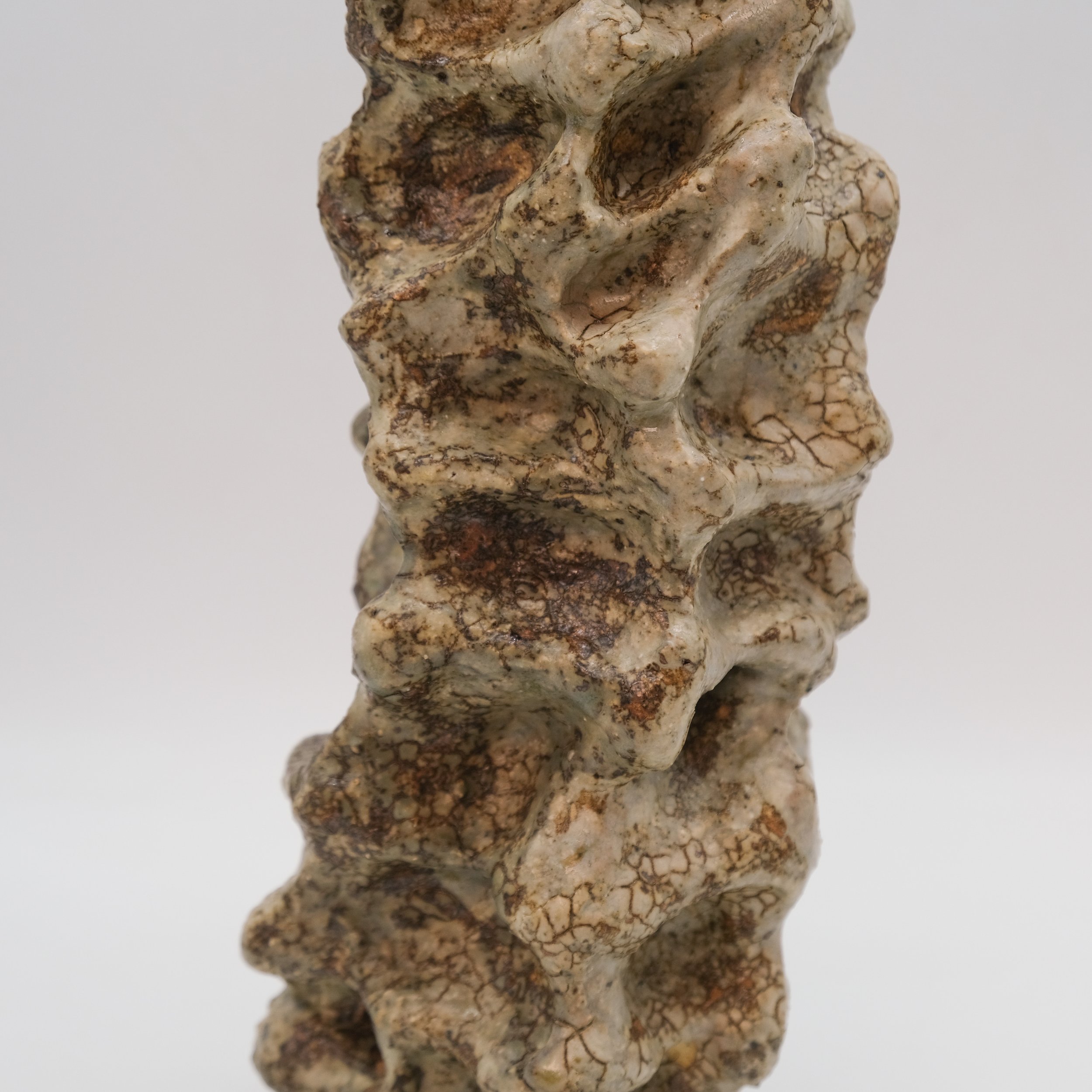
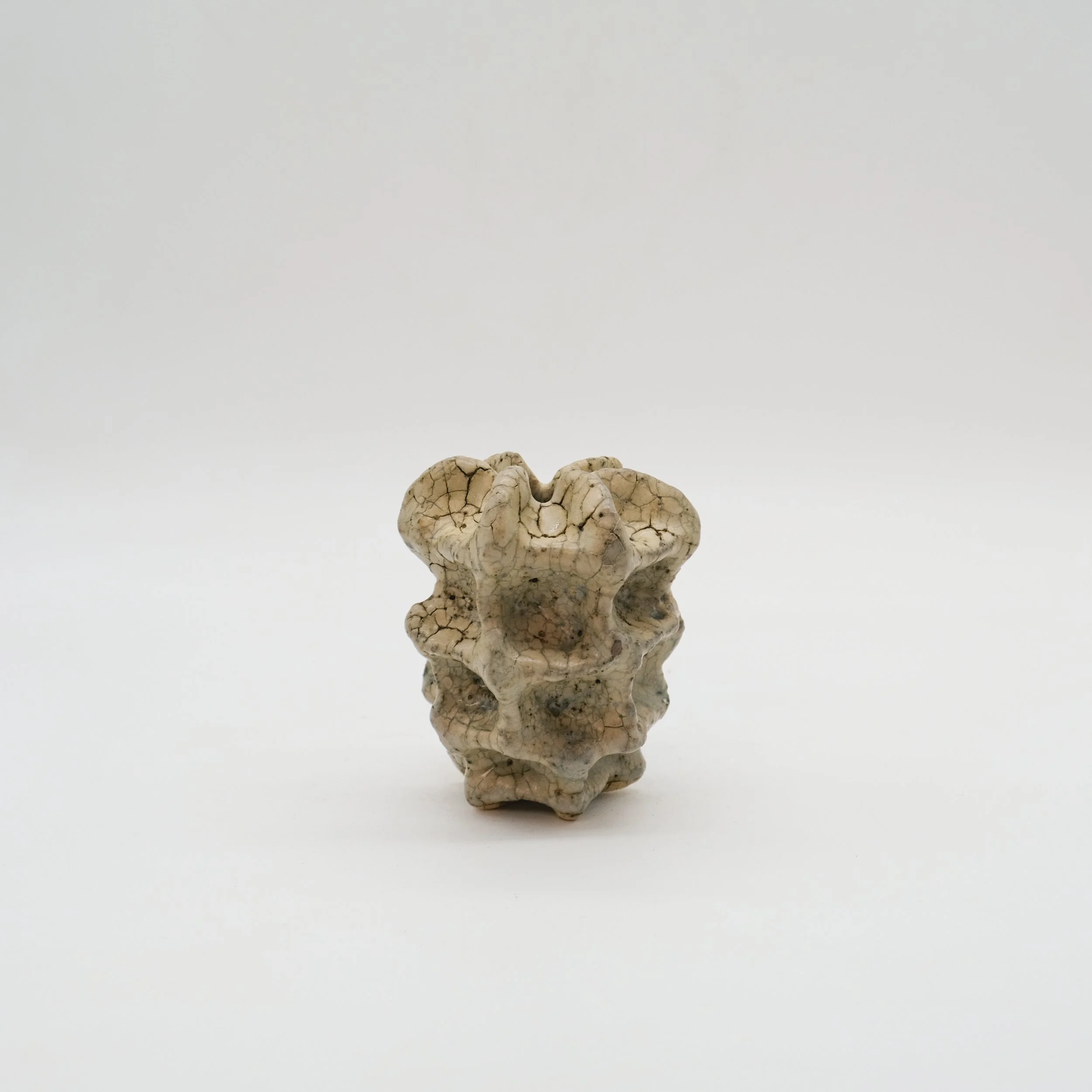
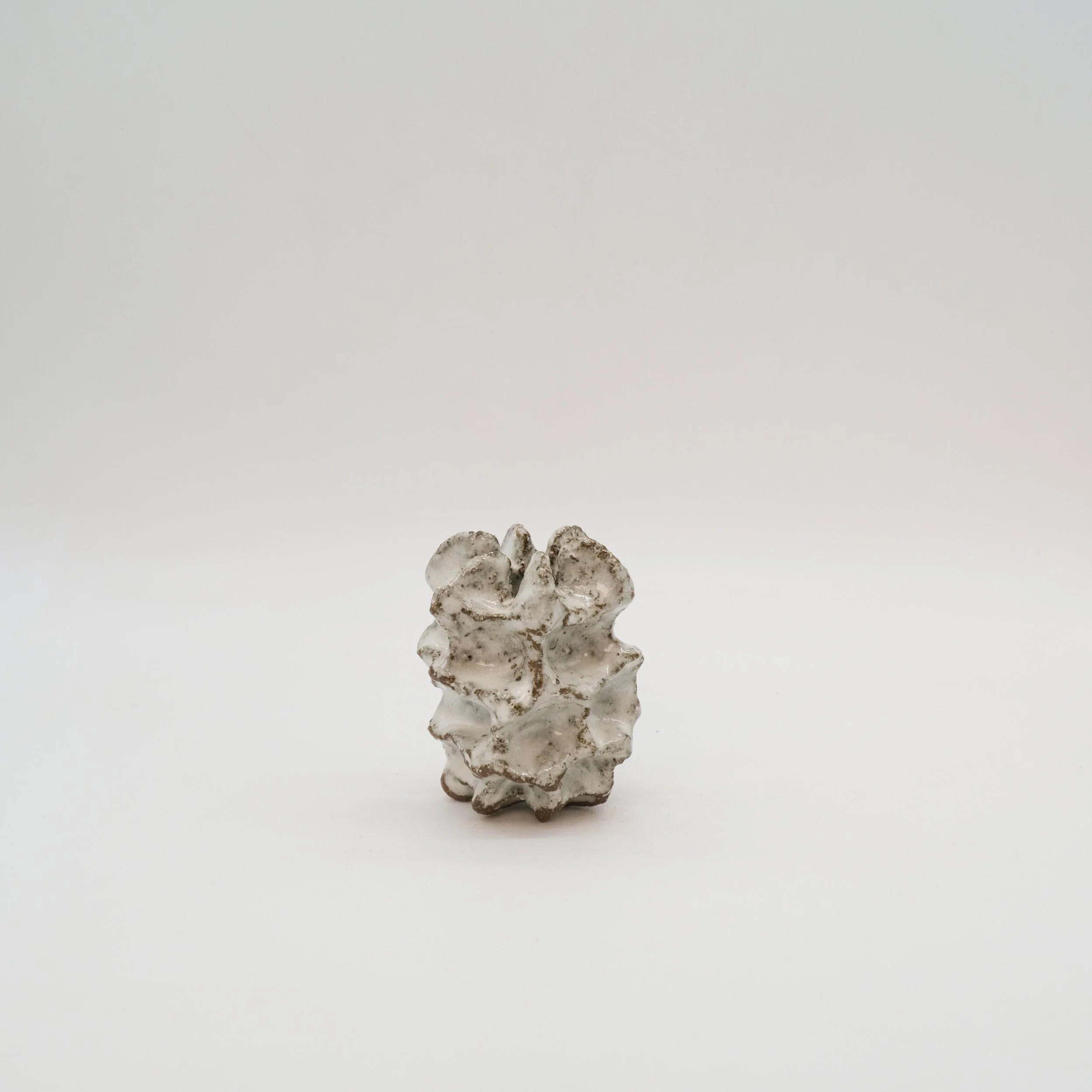
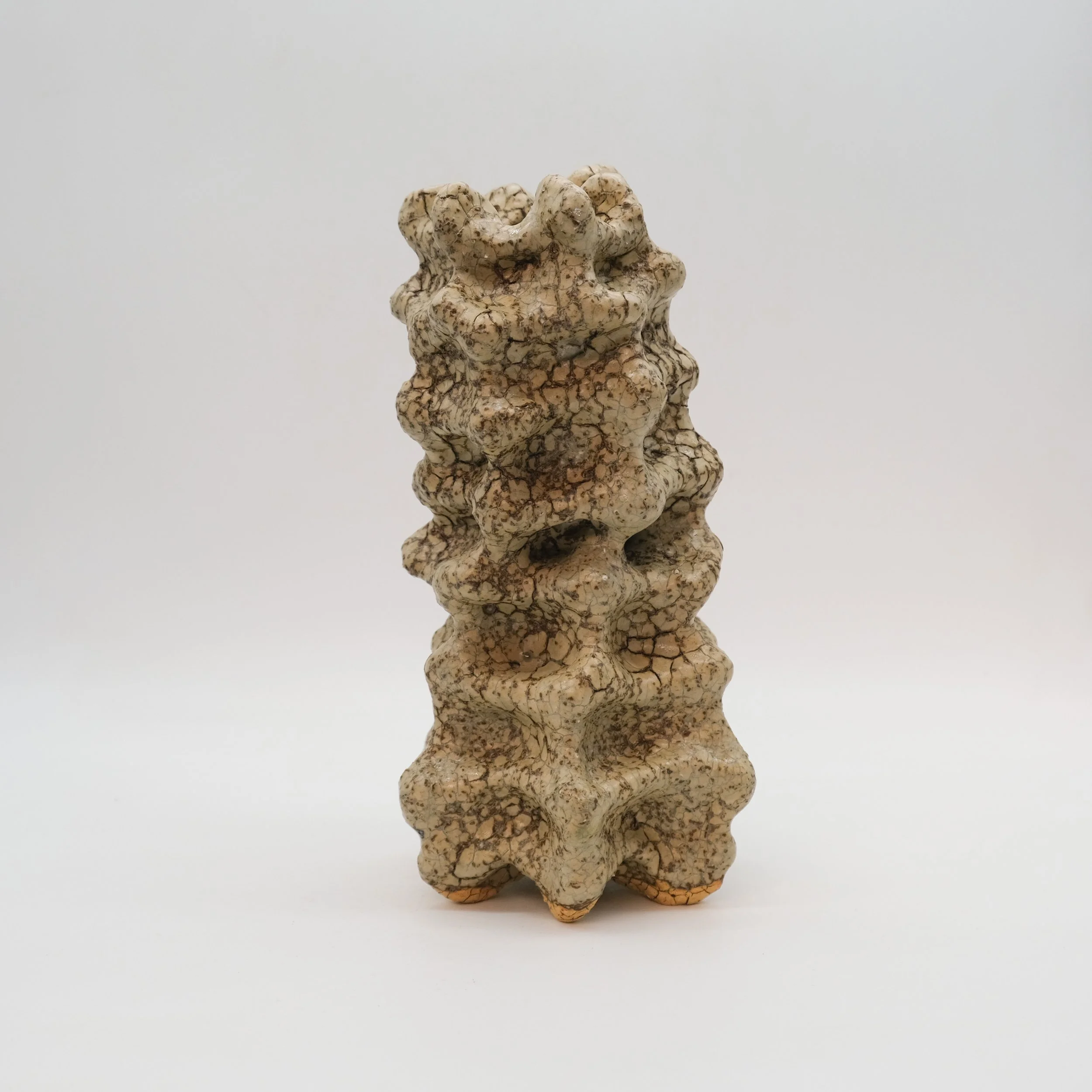
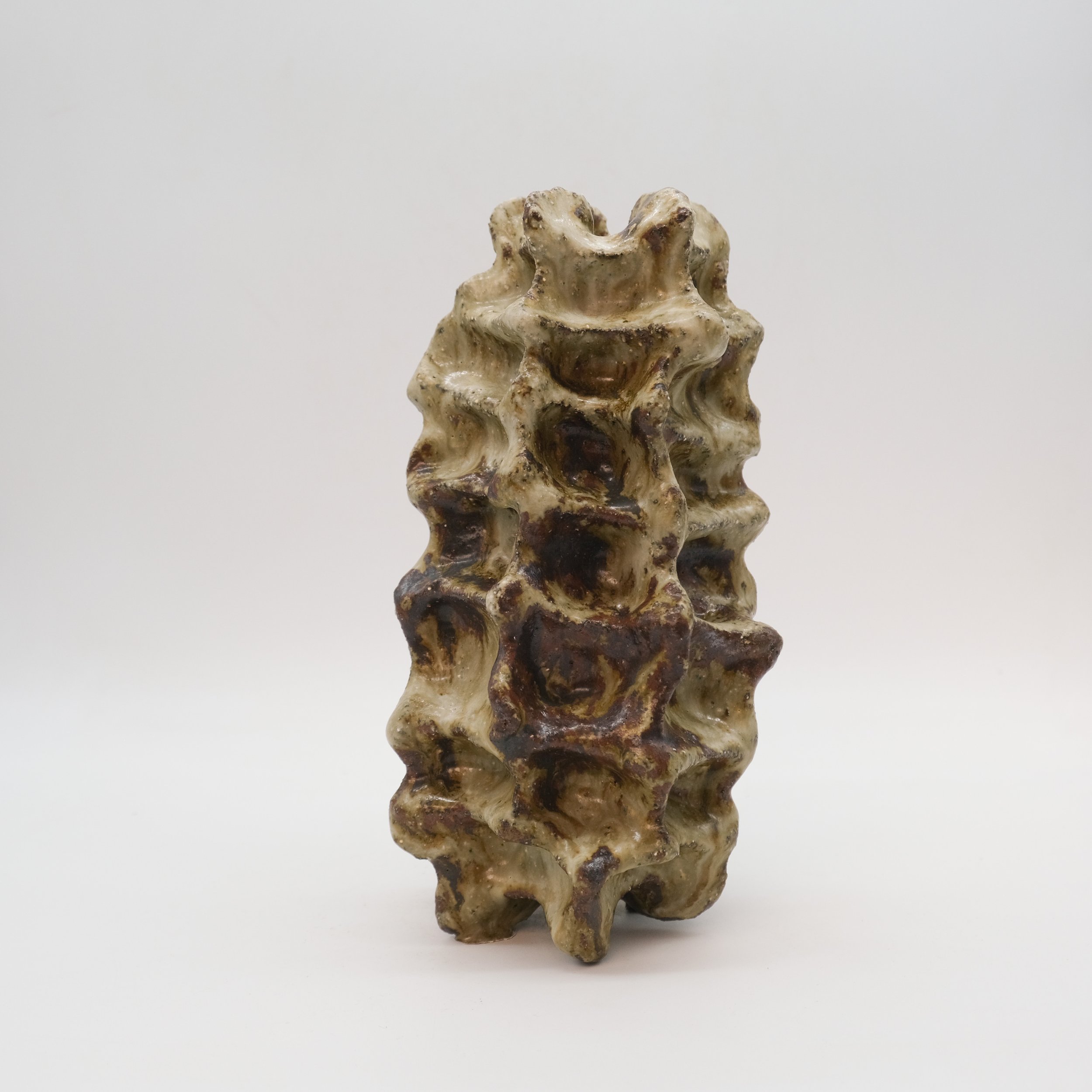
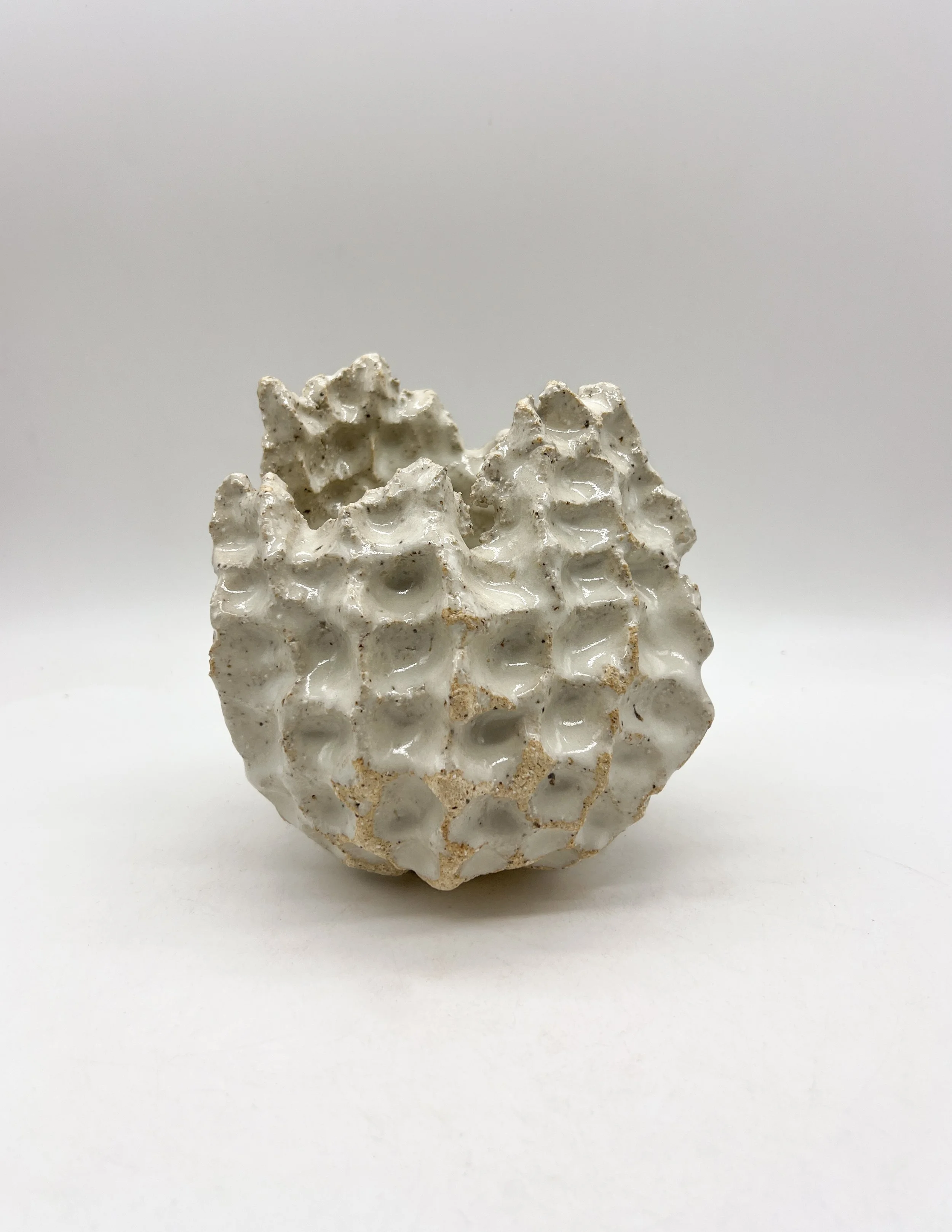
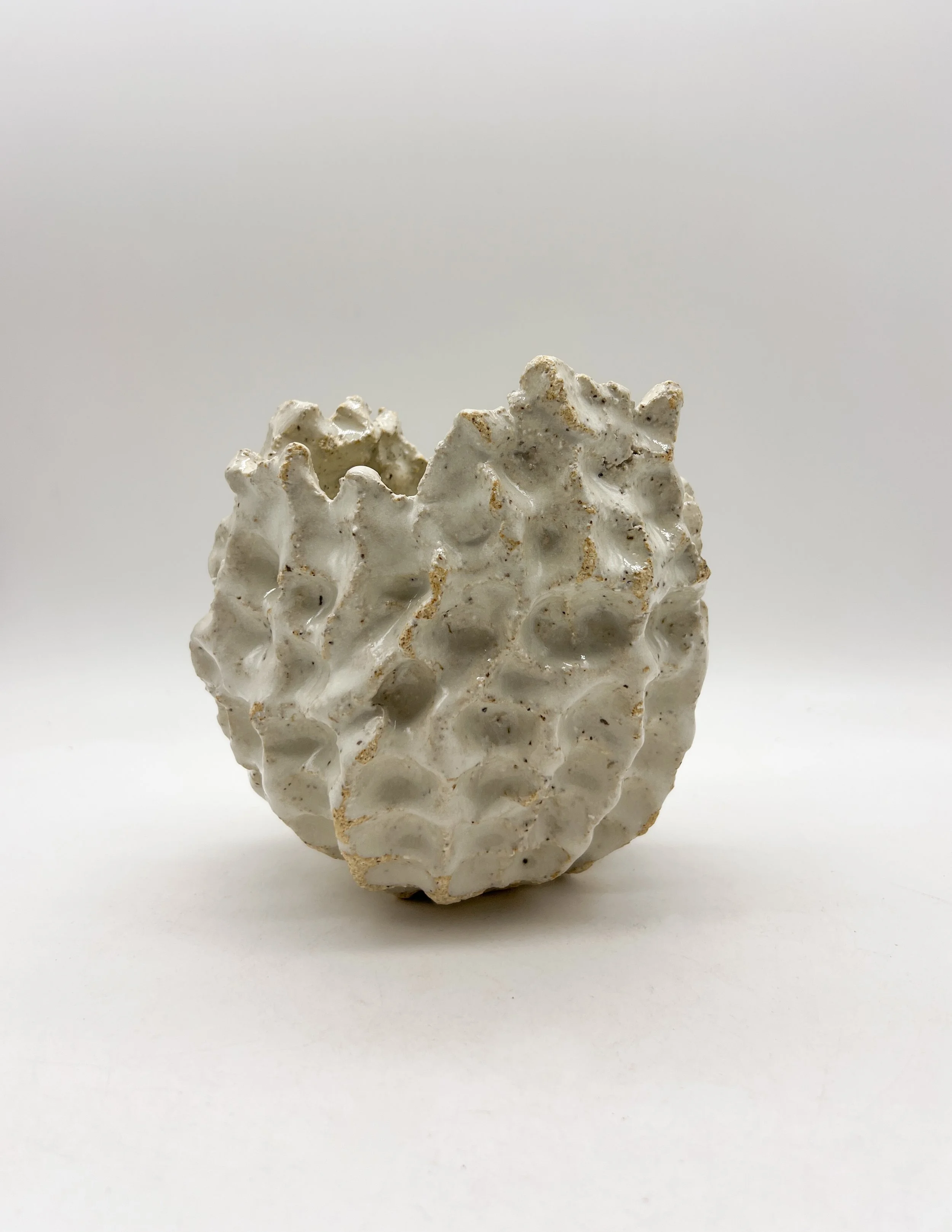
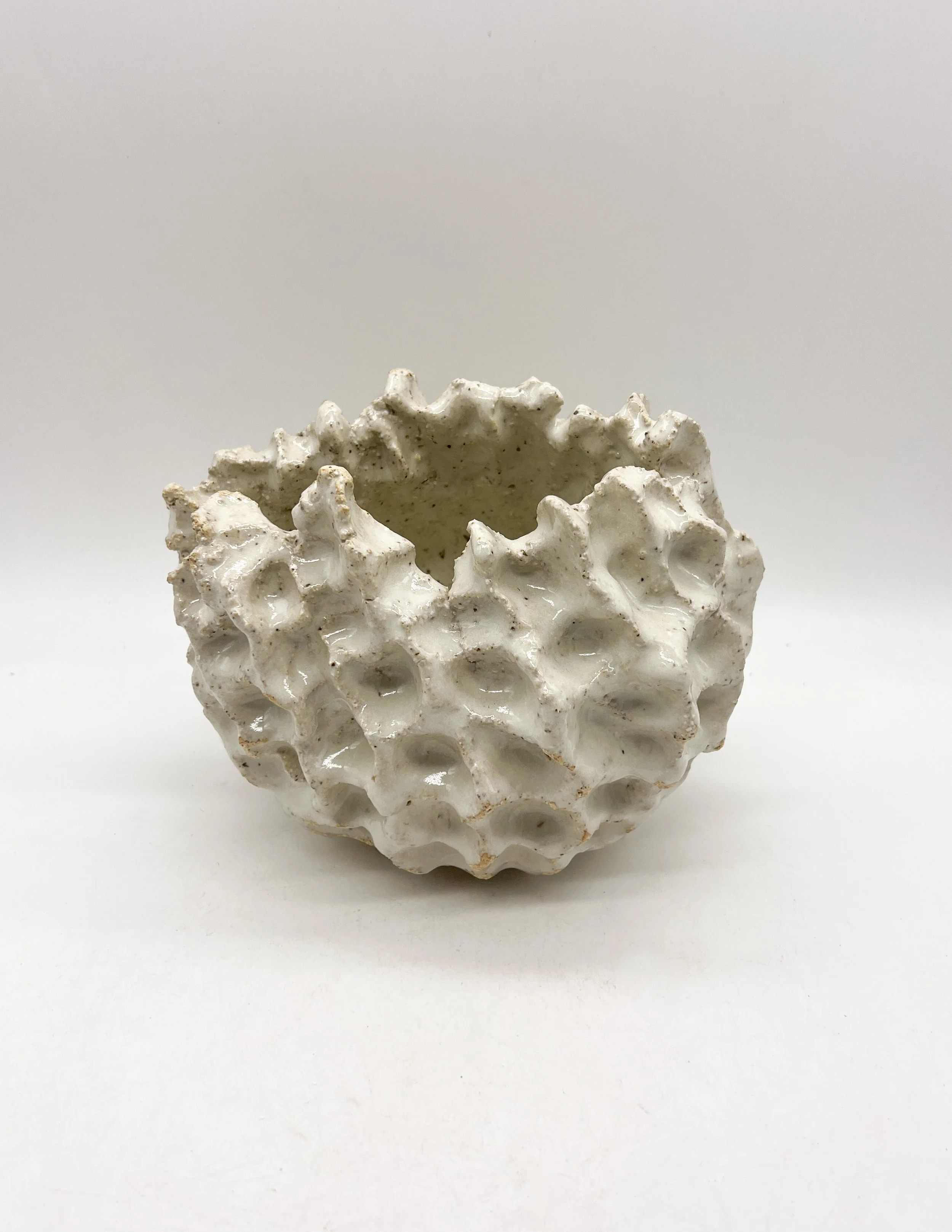
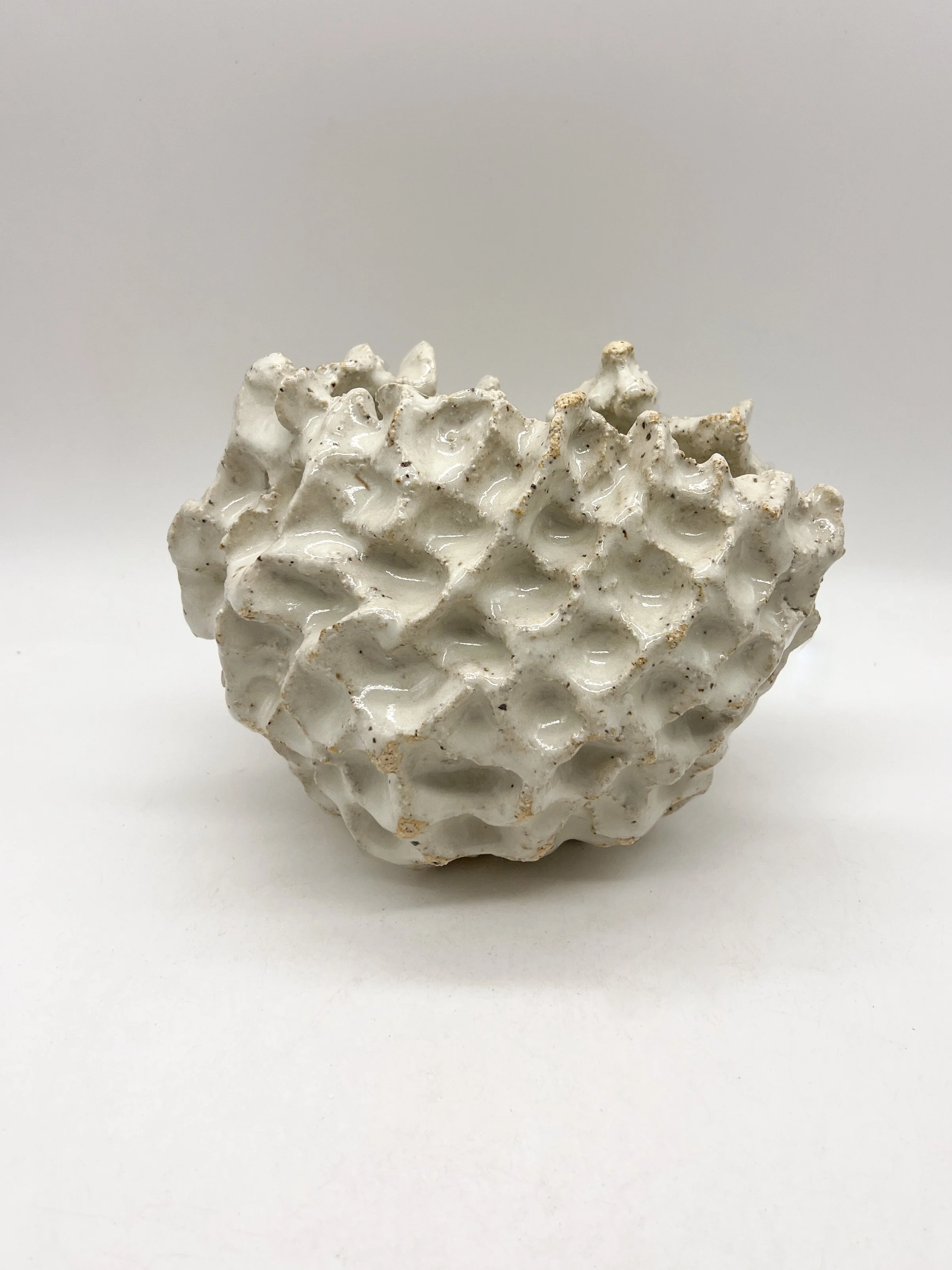
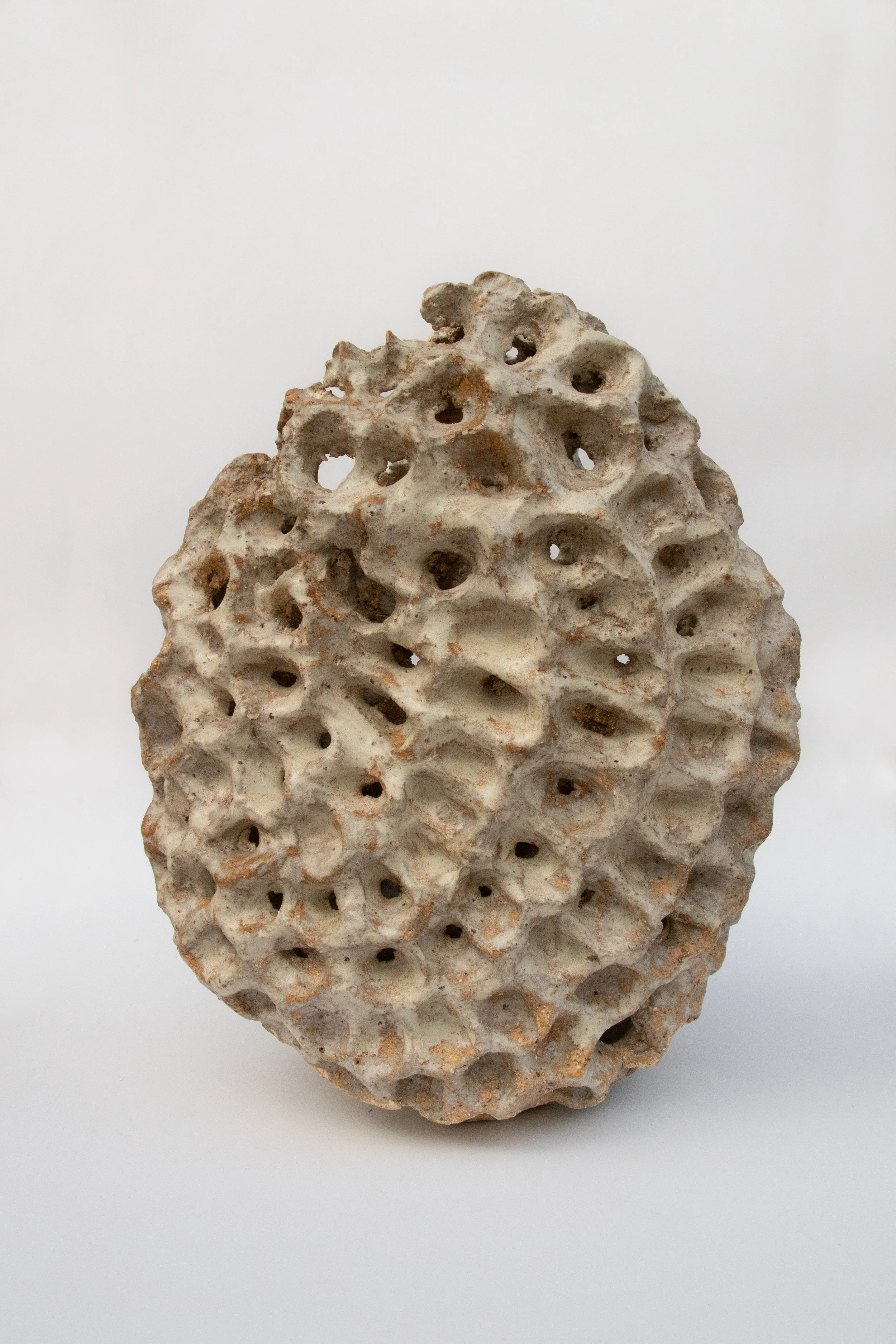
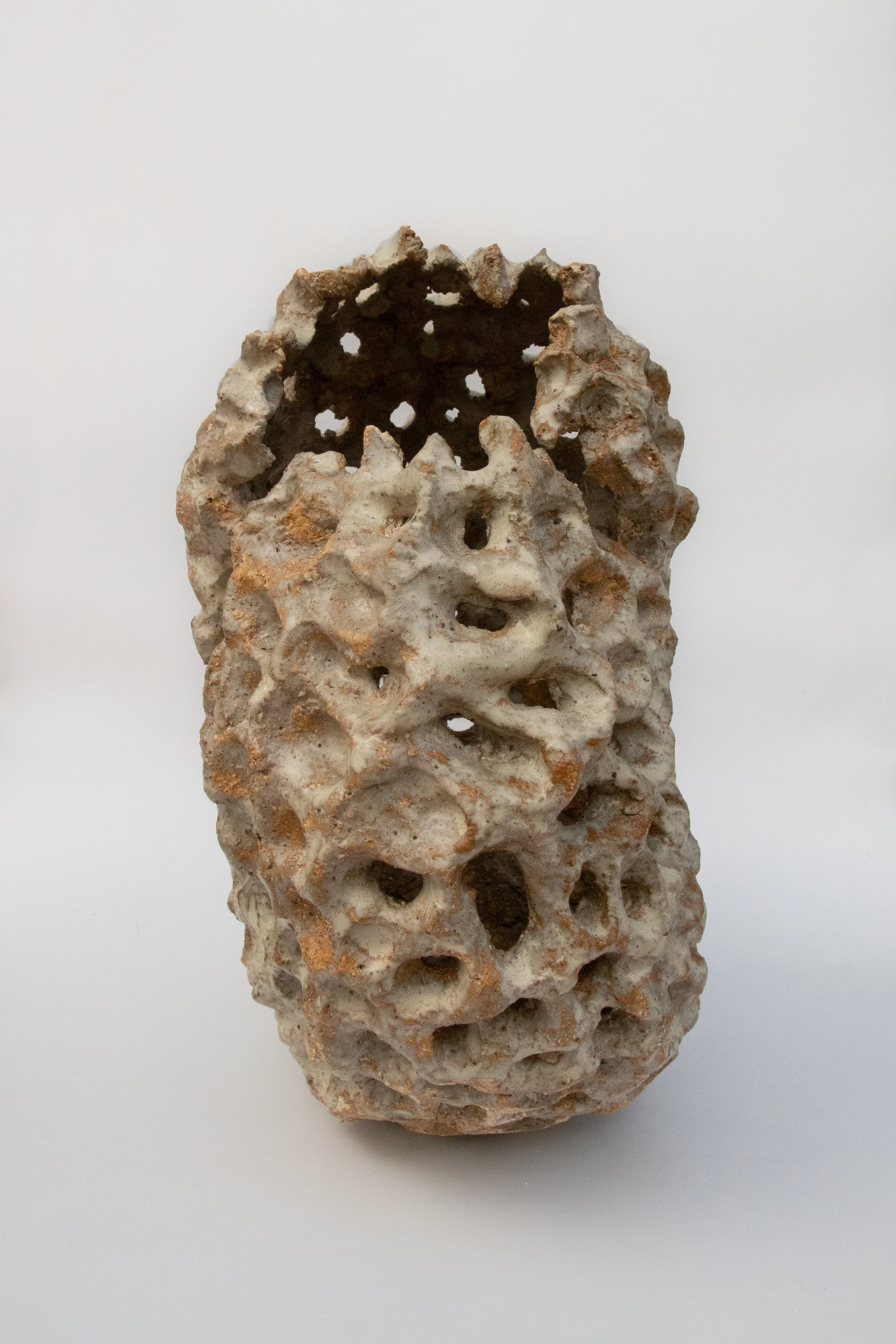
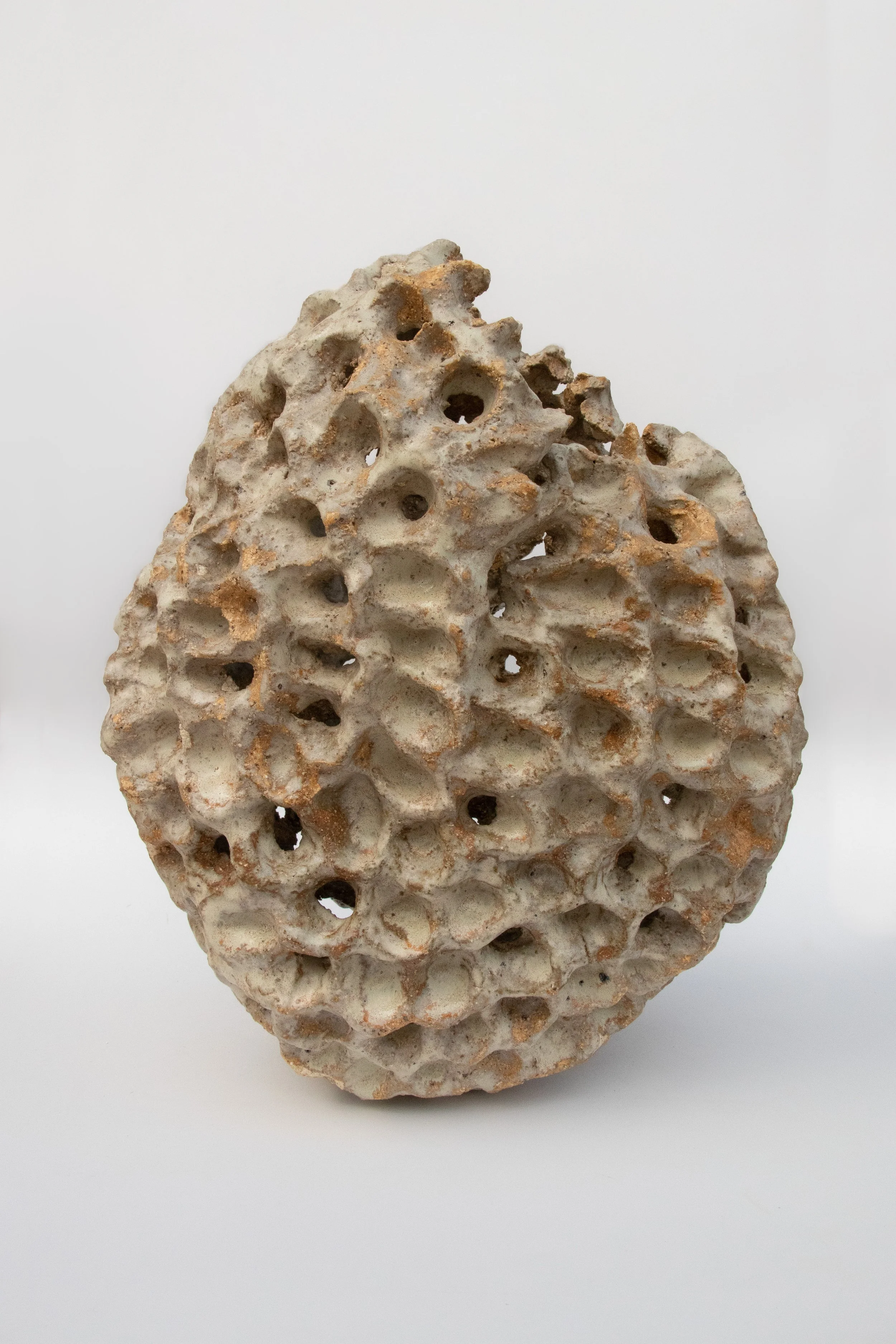
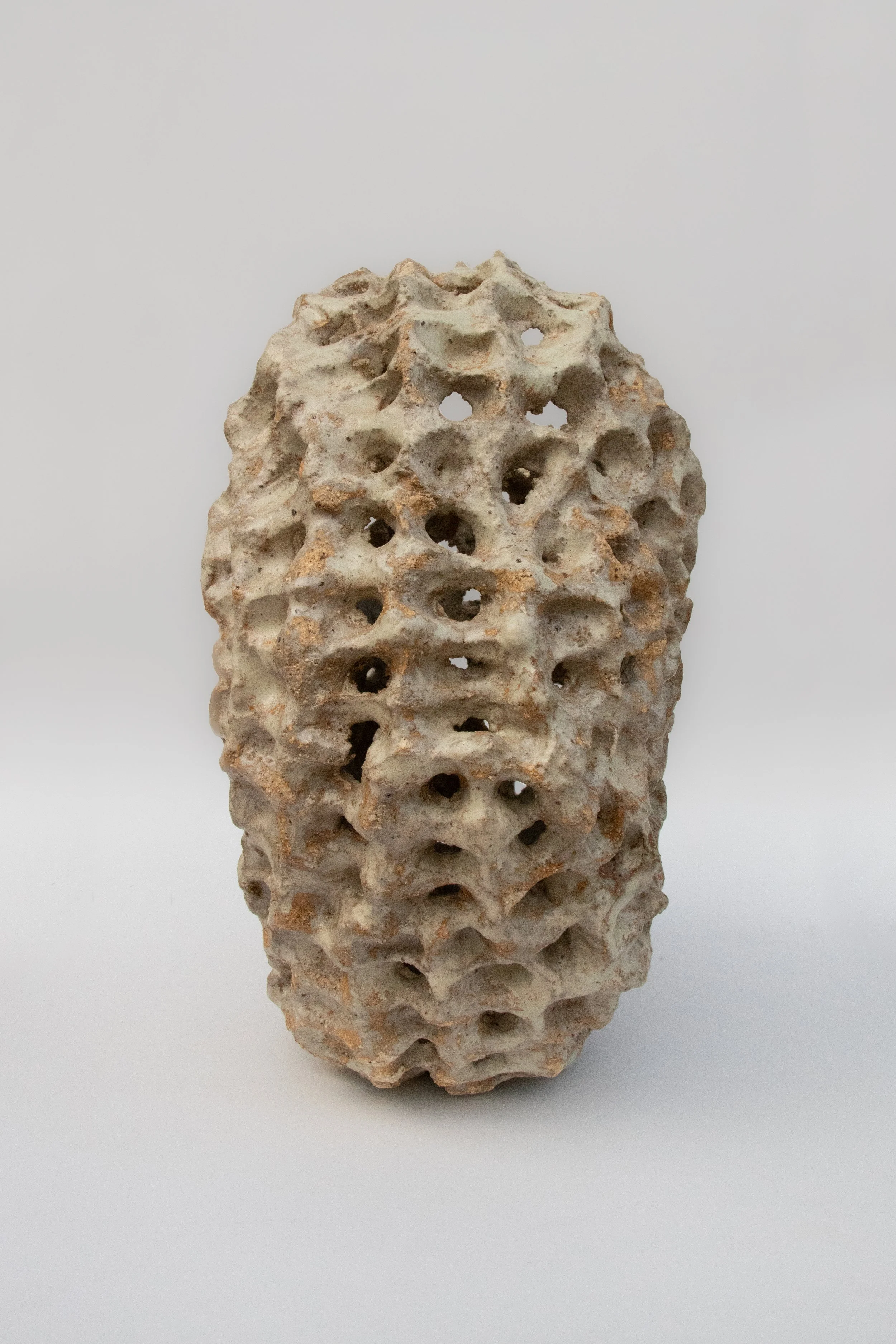
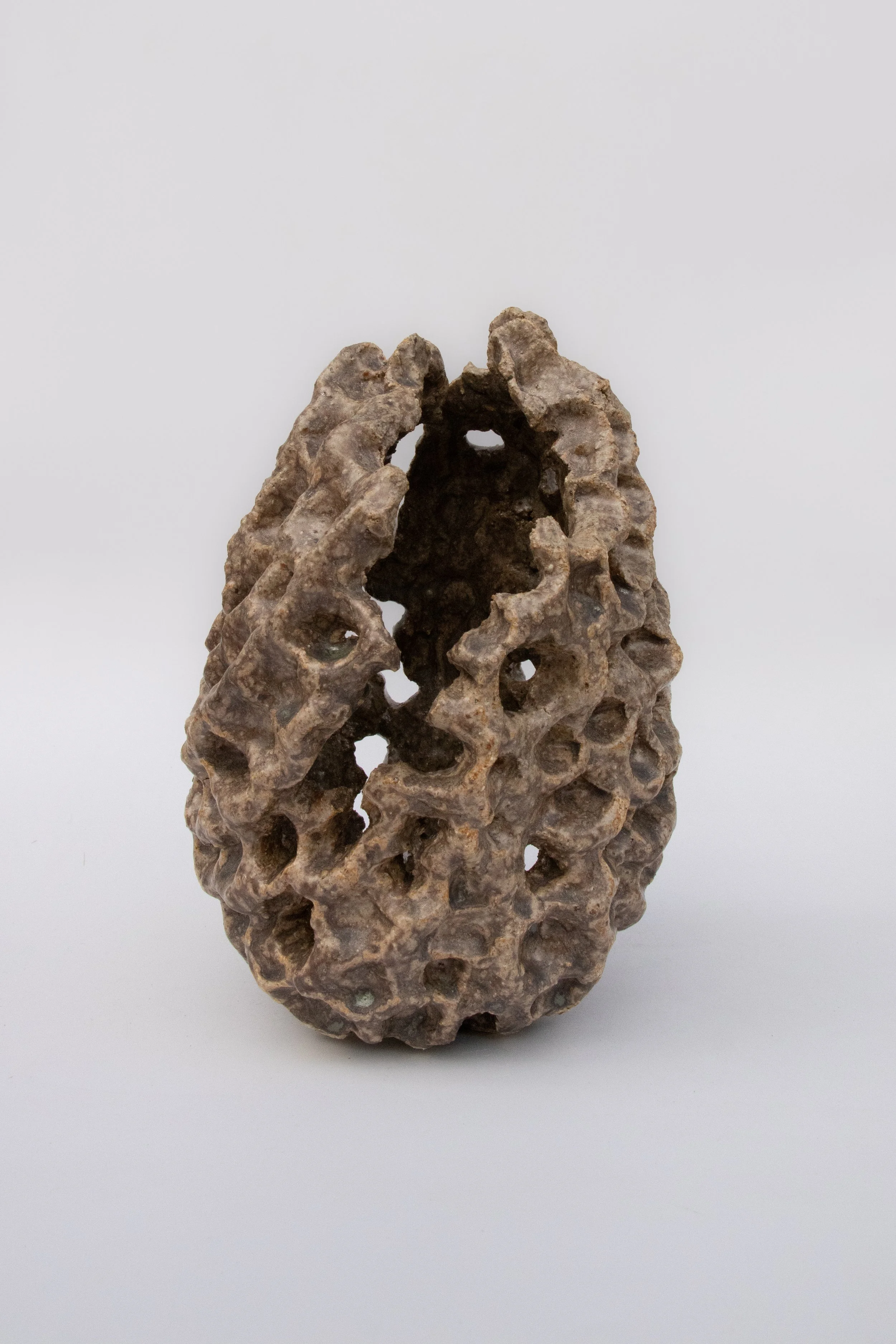
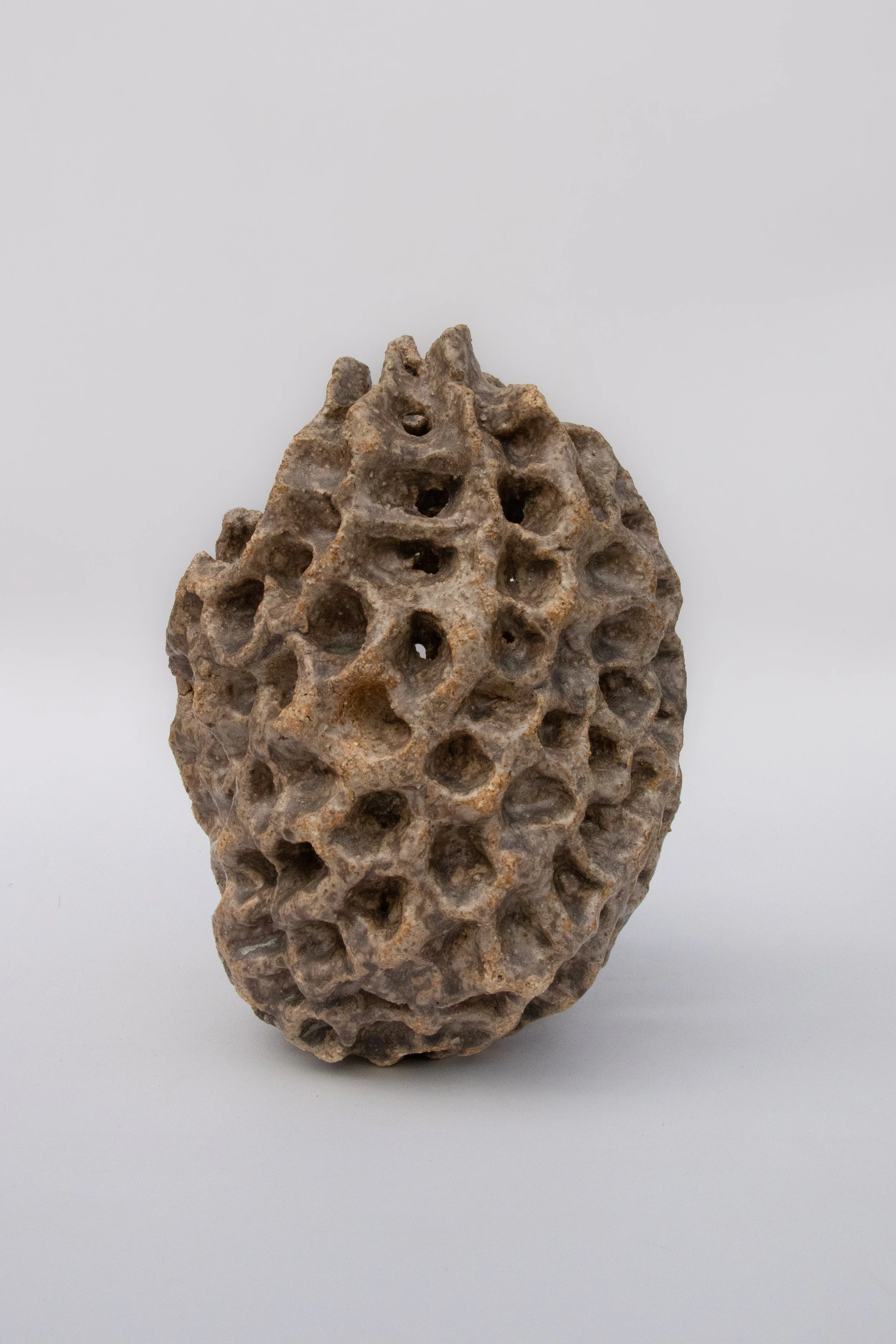
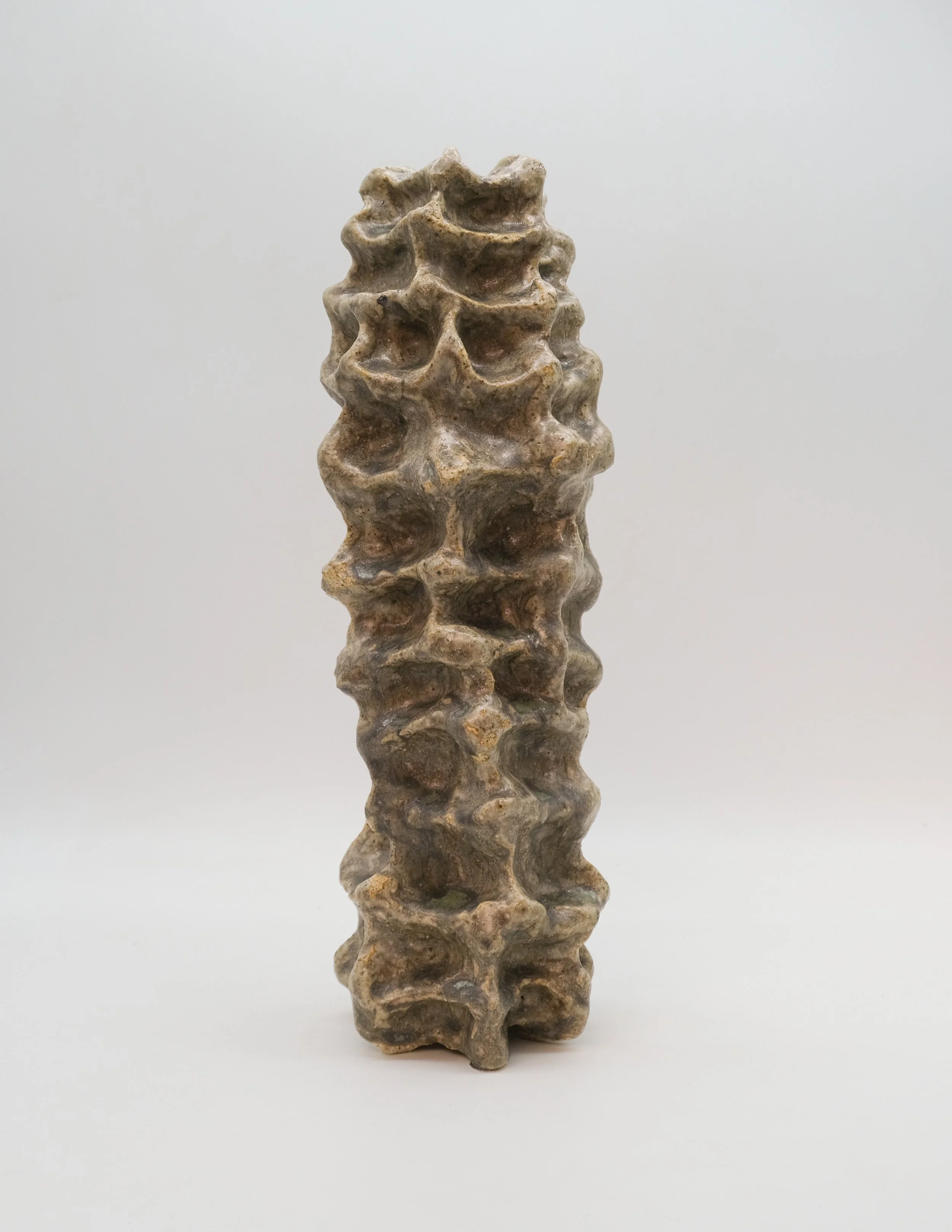
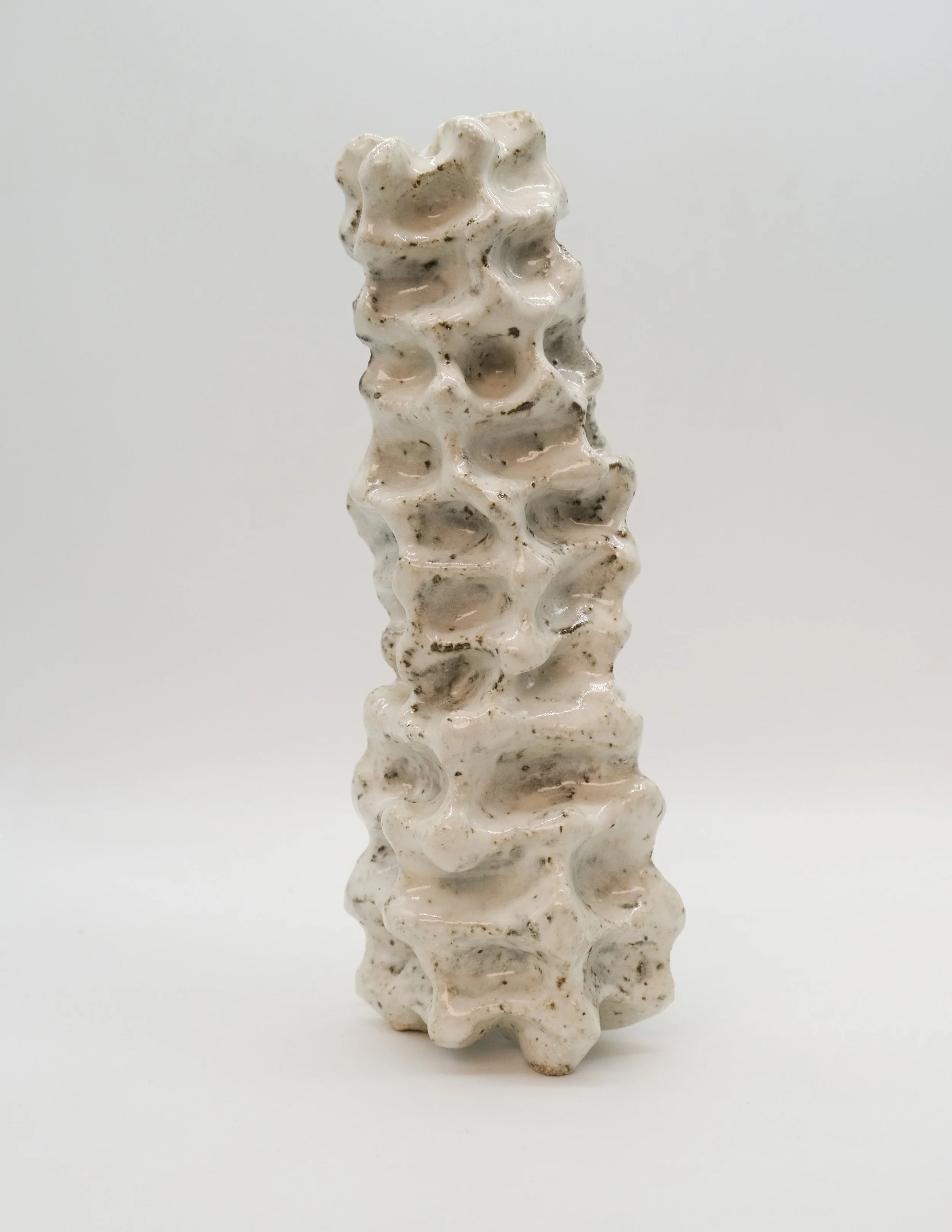
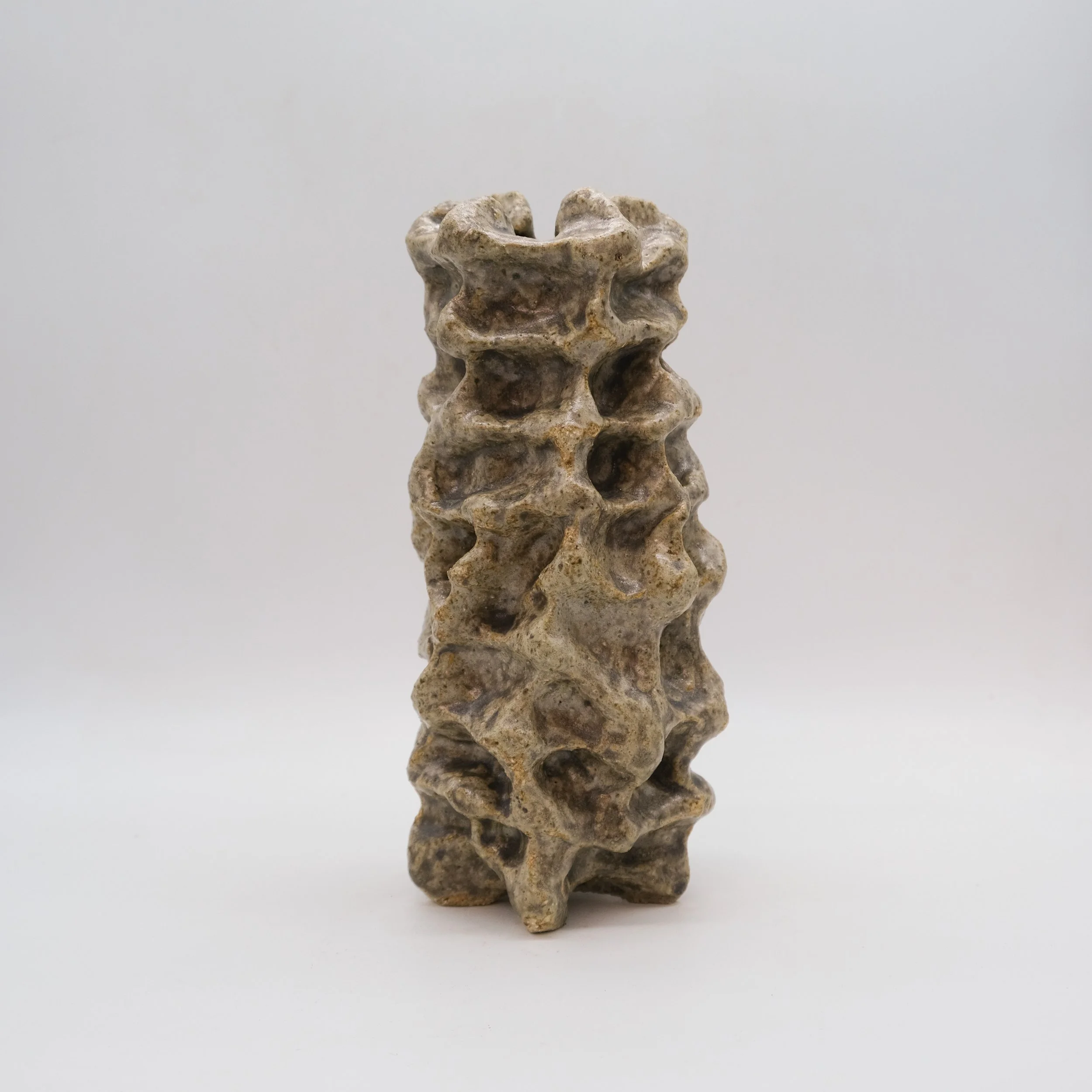
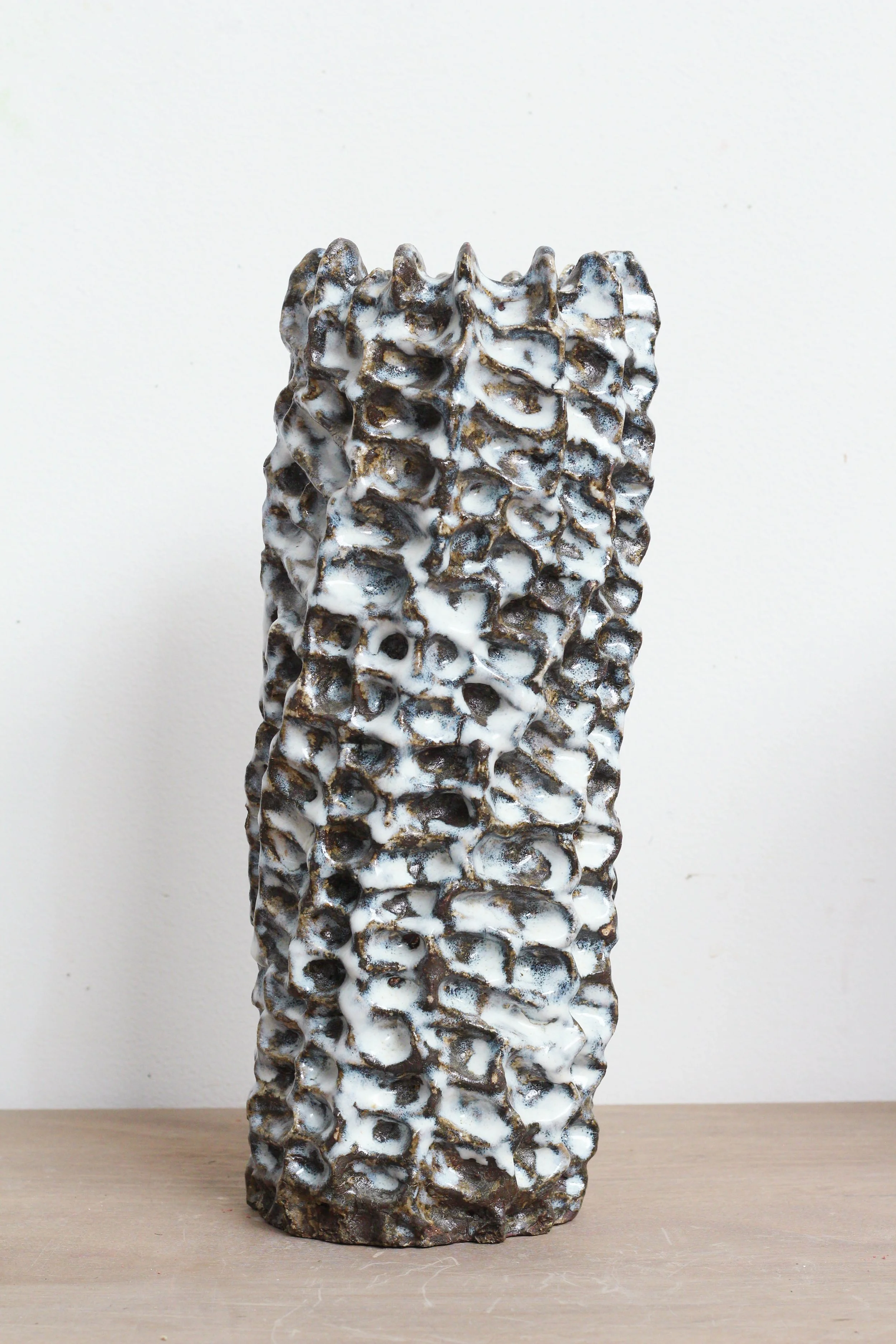
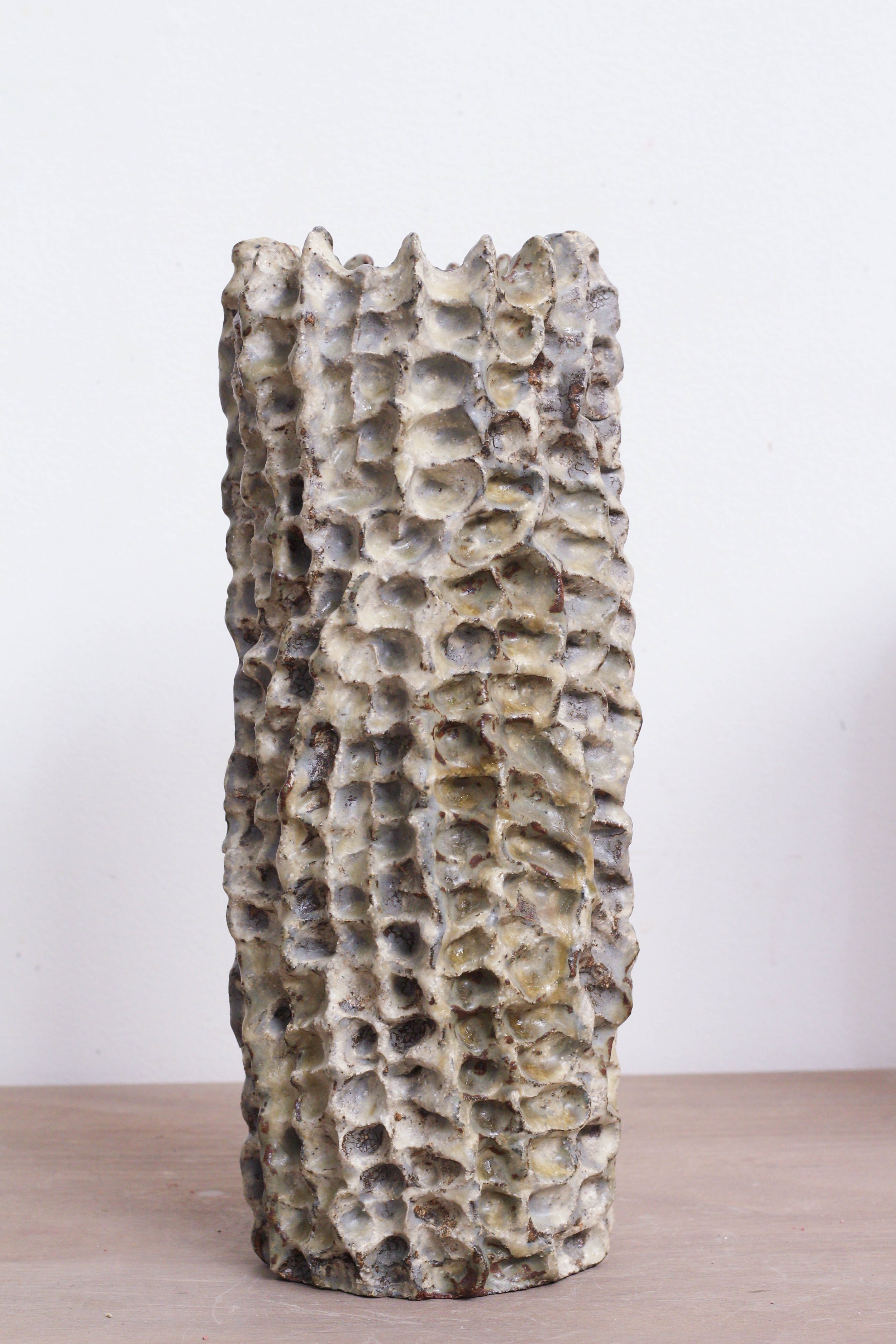
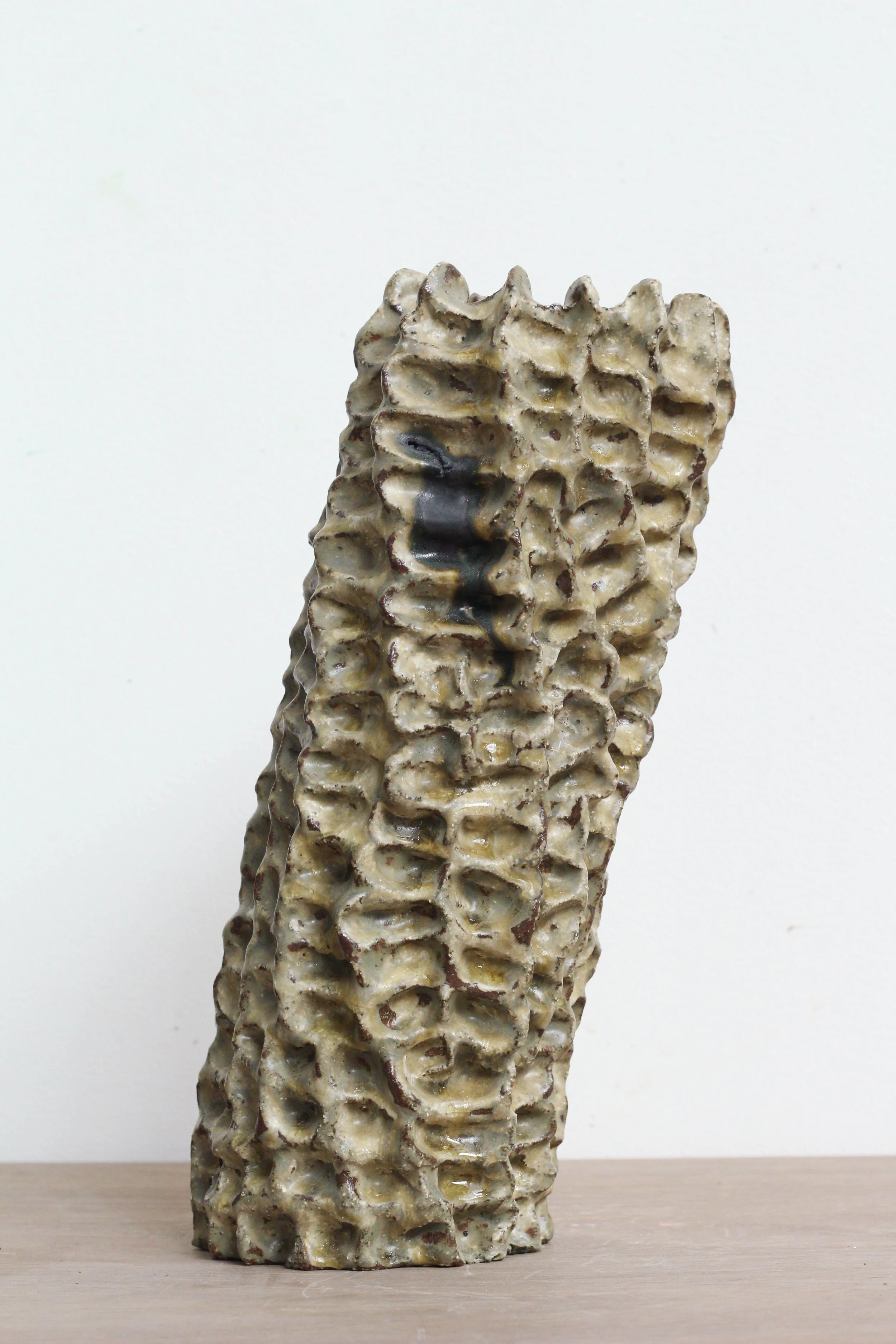
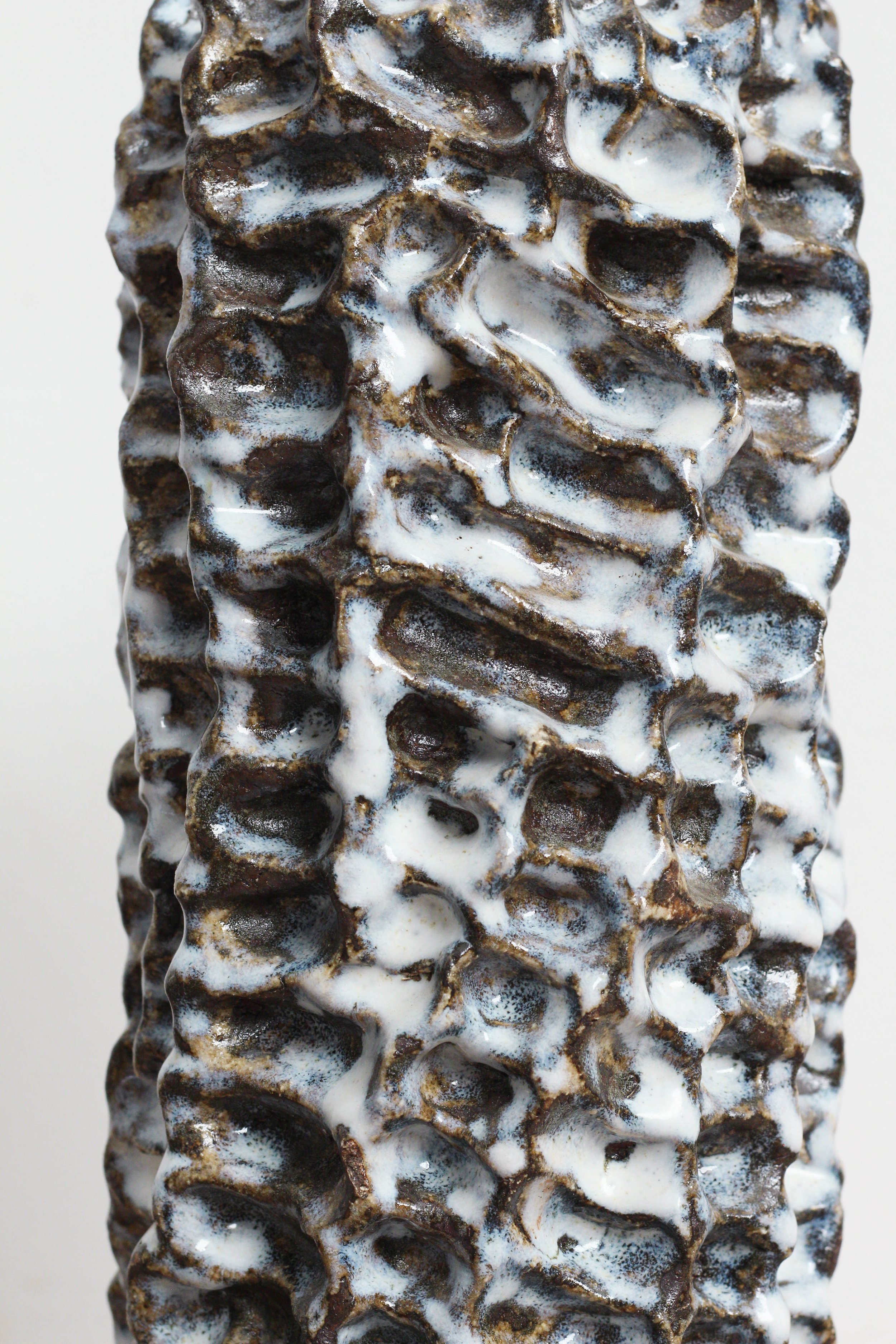
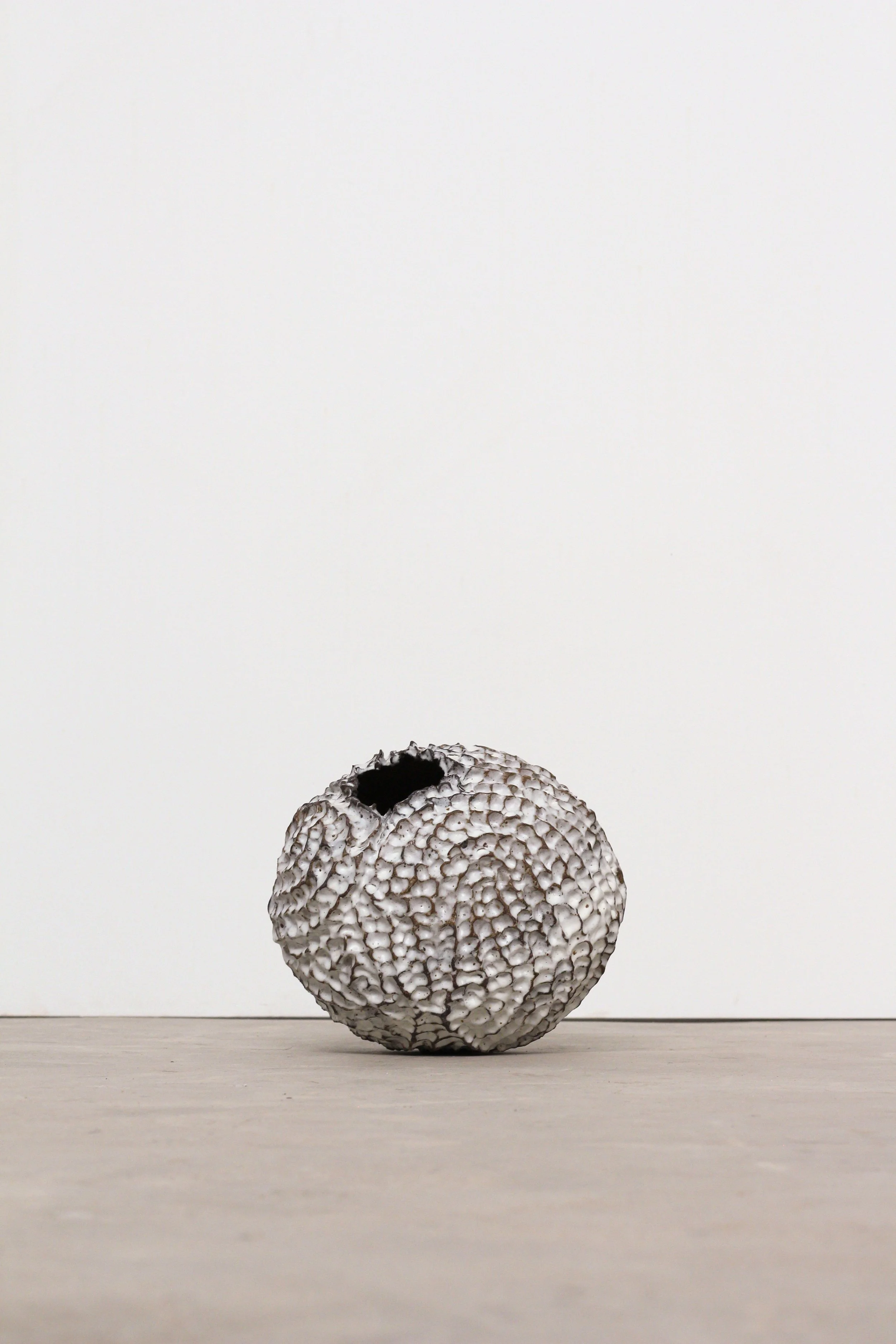
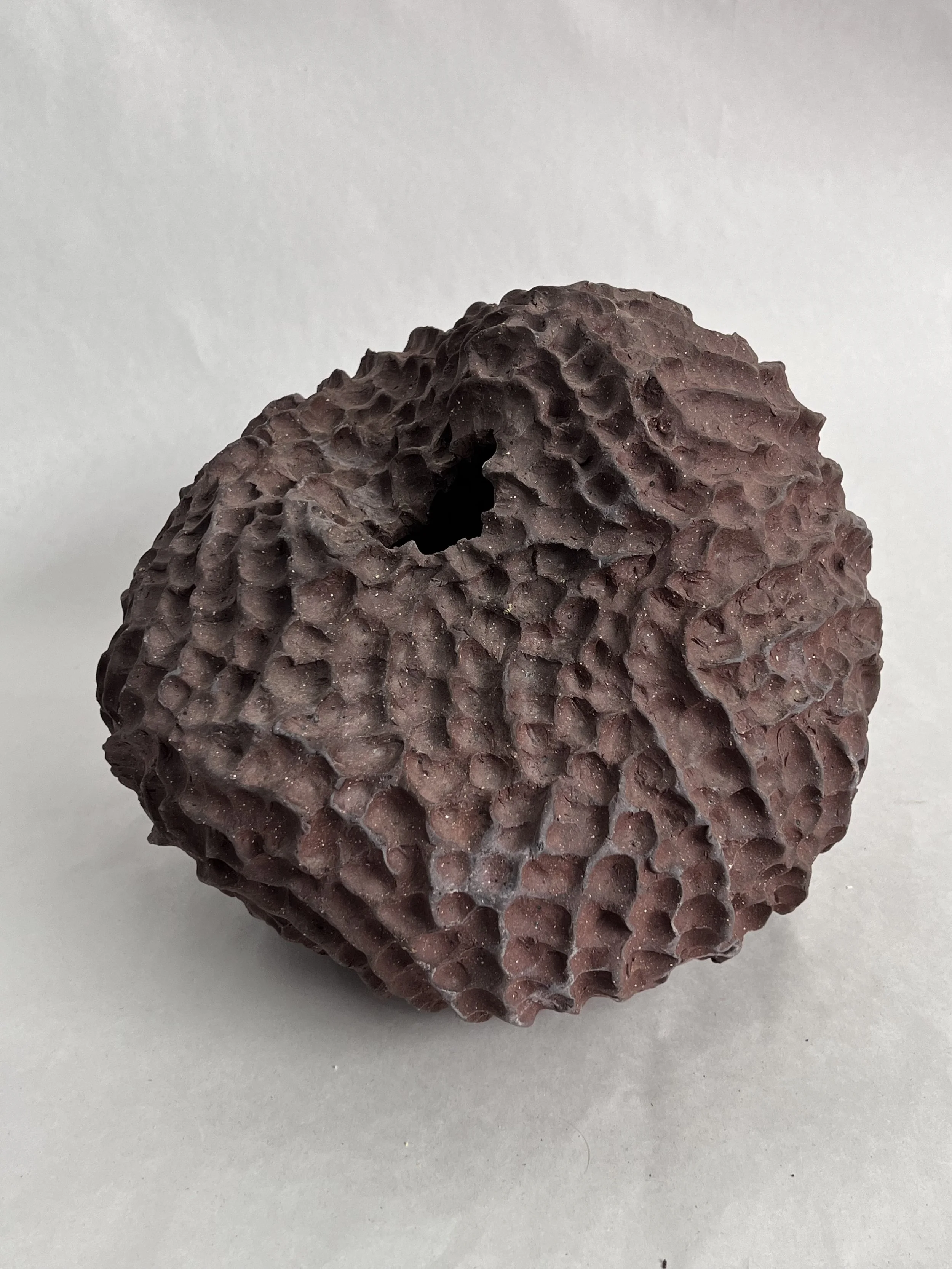
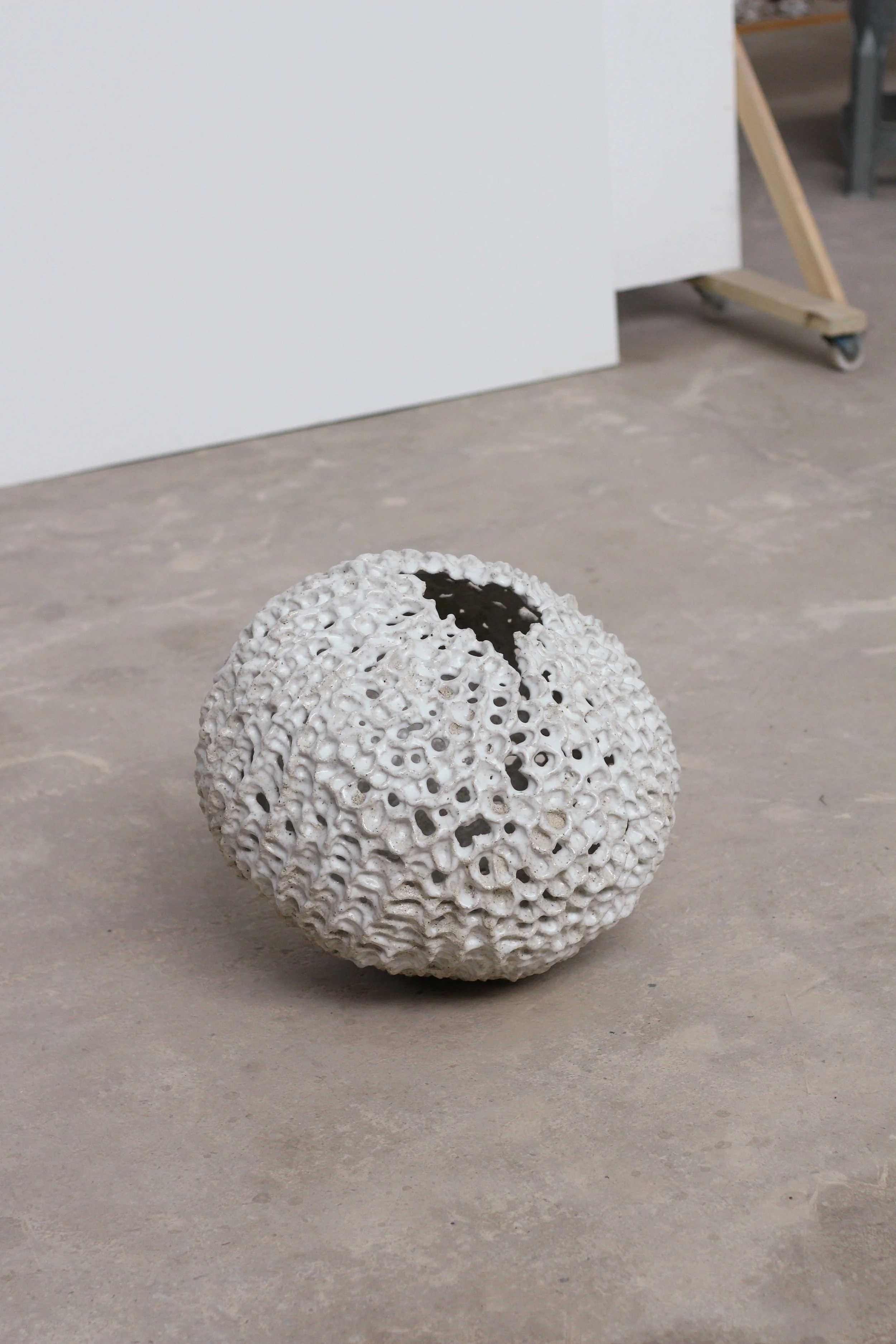
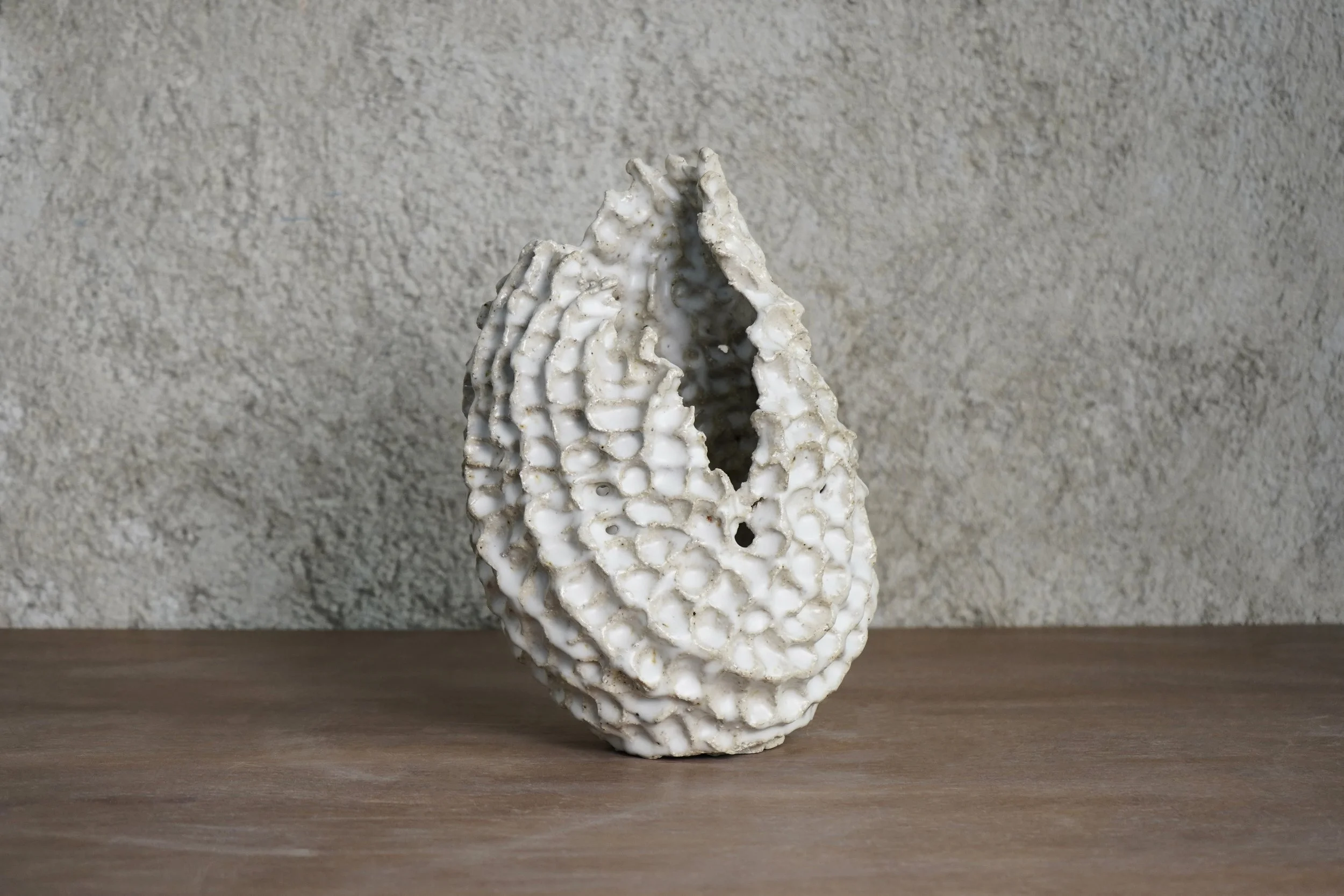
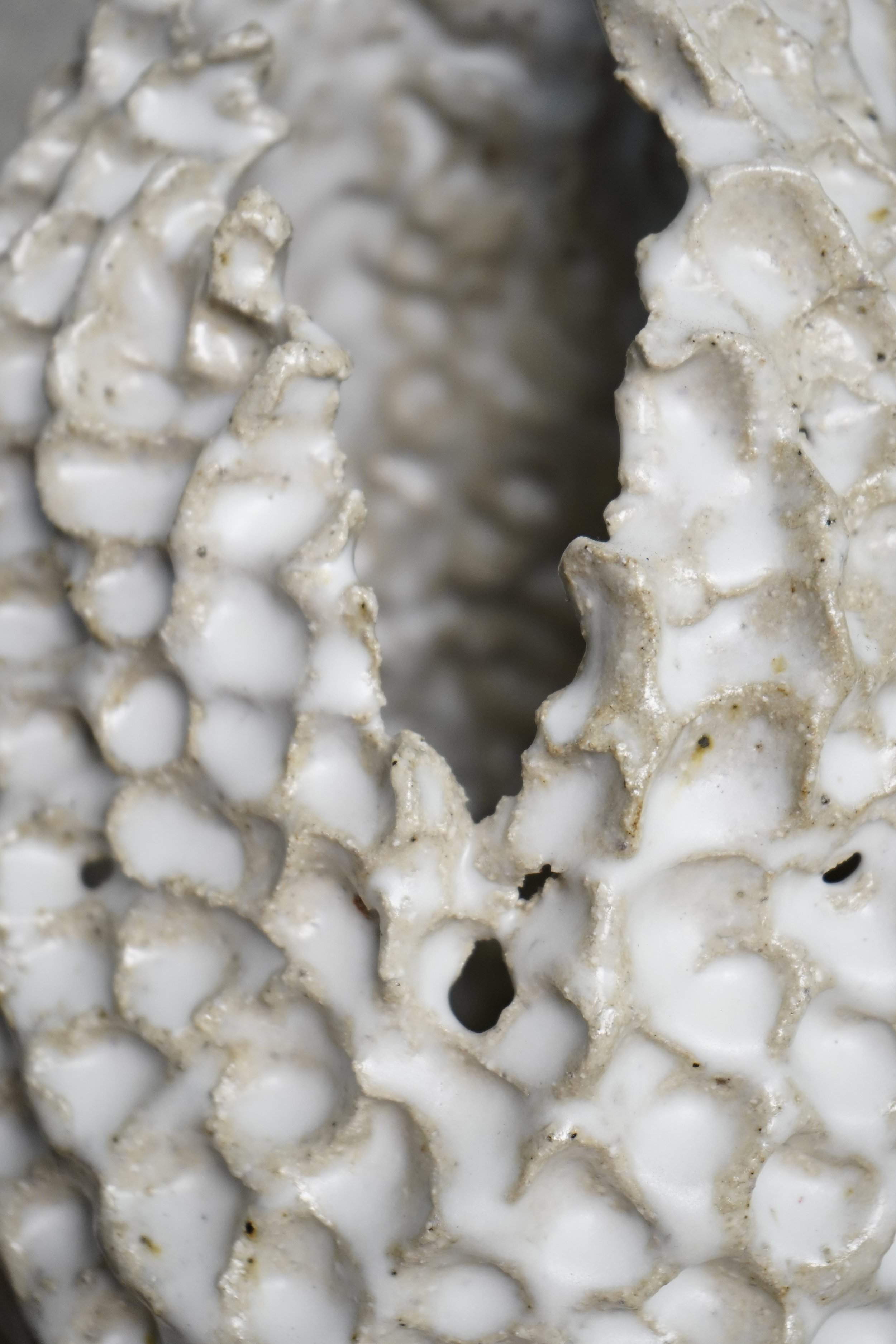
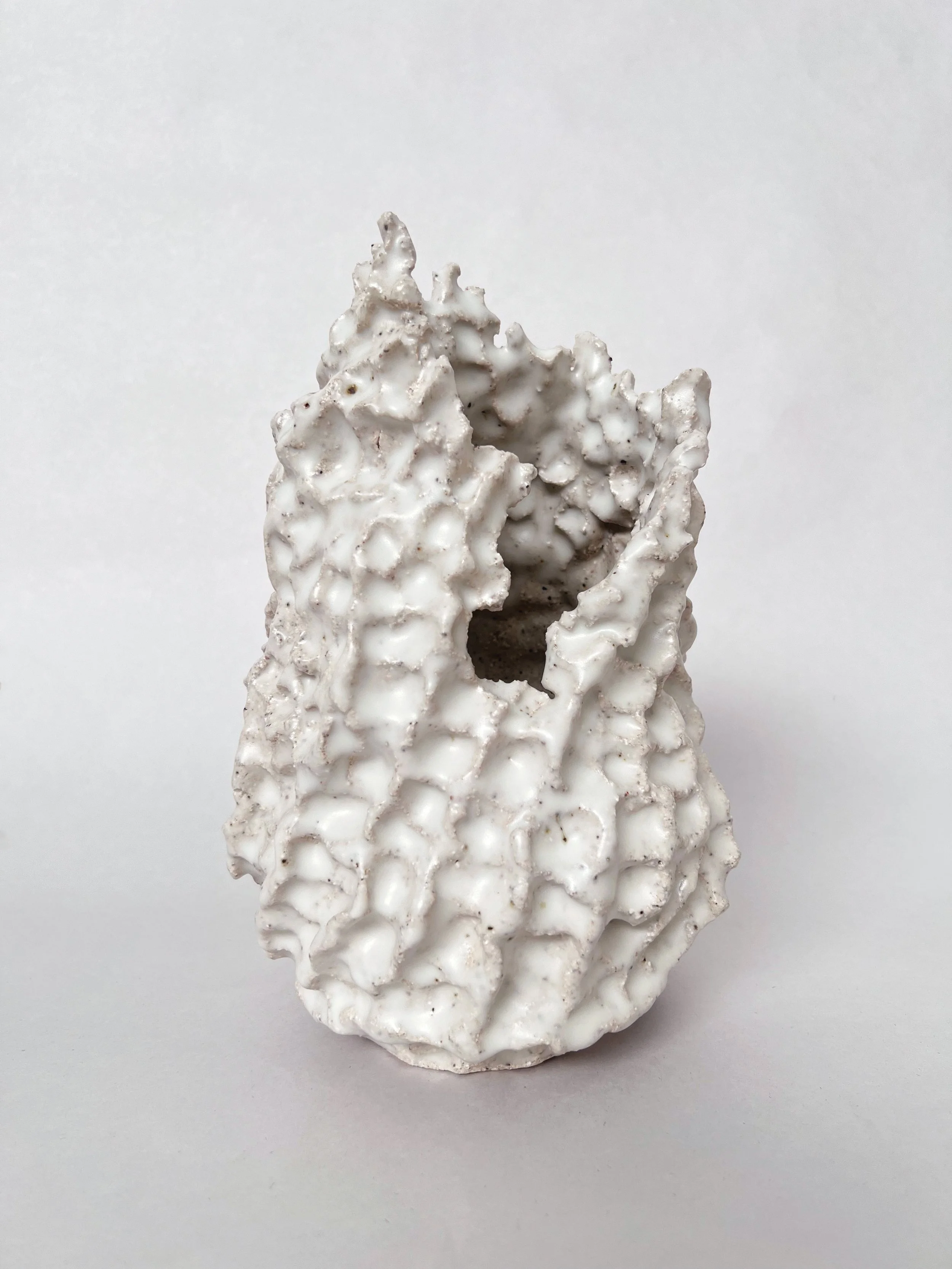
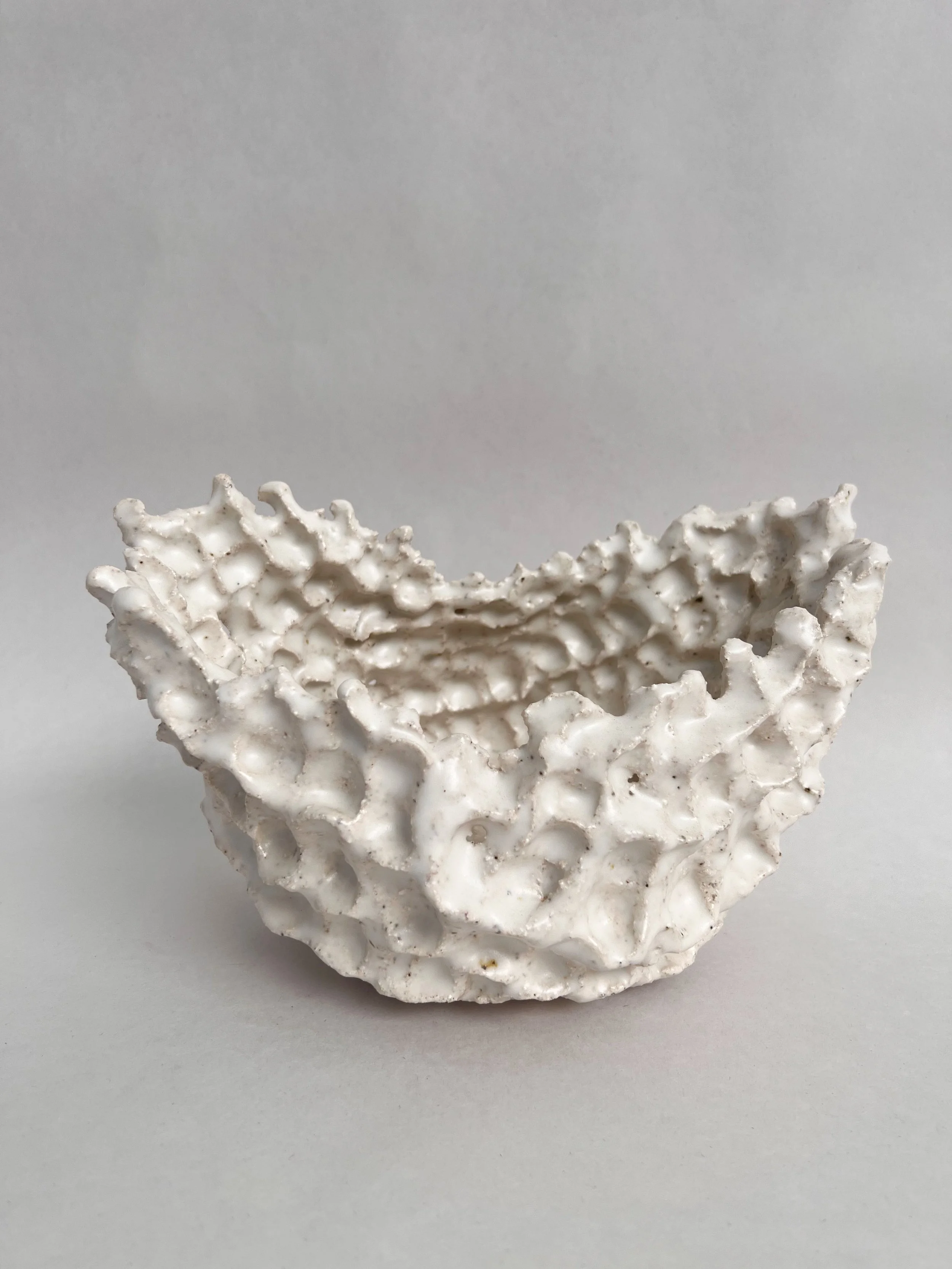
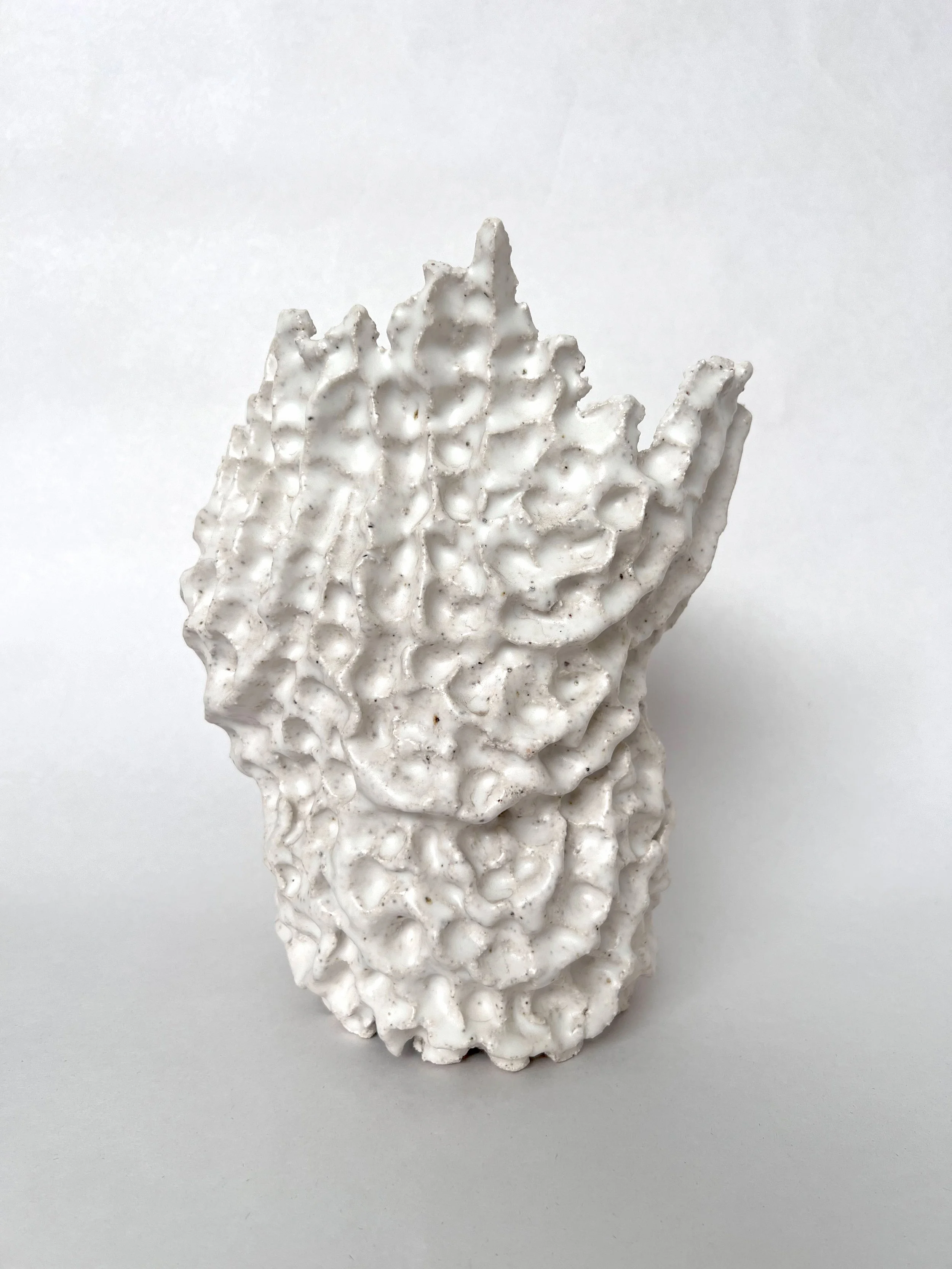
In the studio, I turn to the most basic and universal hand gesture—the pinch—as a way to echo the ways forms emerge in nature. Humans are the only species capable of it with such dexterity. Coiling and pinching, foundational ceramic techniques, gradually weave the sculptures into form like exoskeletons that hold space and time. The imprint left by one hand holding and the other pinching makes the interior and exterior surfaces echo each other. The structures are porous yet self-contained. The forms are human-made but recall cacti, rock formations, corals, beehives, and other natural architectures built by repetition and accumulation.
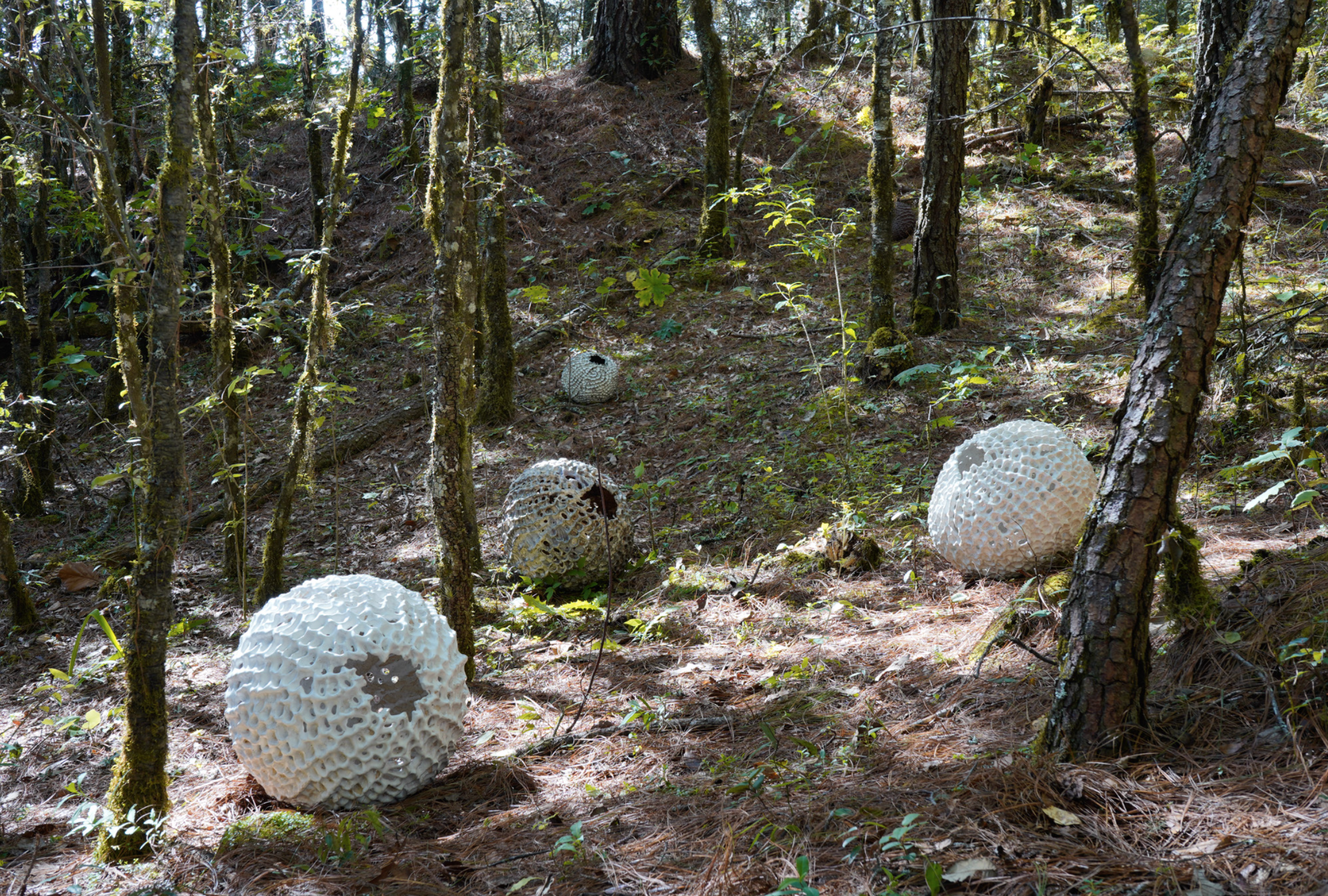
The glazes, made from encino ash gathered in Oaxacan kitchens, becomes an index of the place where the works are conceived and made. Iron engobes and ash glazes produce a spectrum of earth tones drawn directly from the surrounding landscape. The sculptures are made in multiples and shown in groupings—the way that, in nature, one rarely finds a single isolated thing, but rather a constellation: similar, yet each one unique.